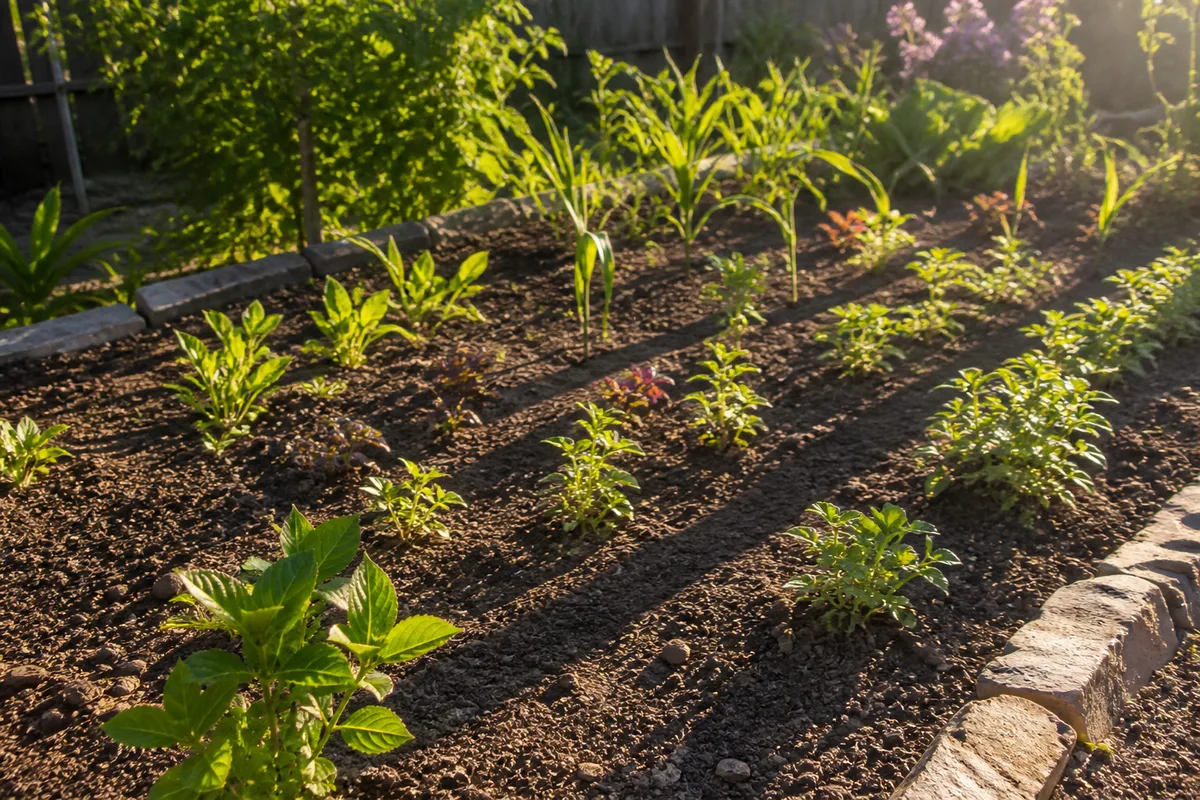
I have watched the same plant thrive in one corner of a yard and slowly give up in another, ten feet away, with the same soil and the same watering. The only thing that changed was the light. That is the frustration this article is about: the little sun symbols on plant tags are the vaguest instructions in gardening, and they cause more quiet failures than bad soil or a dry summer. A tag says "full sun," you plant it in a spot that feels bright, and by July the thing is limp and flowerless and you cannot figure out what you did wrong. Usually you did nothing wrong except trust a picture instead of counting hours.
So this is a piece about the mechanism first and the labels second. Once you understand what a leaf is actually doing with sunlight, the words on the tag stop being mysterious and start being a number you can measure in your own yard with a notepad. I will translate "full sun," "part shade," and "full shade" into real hours, explain why the same six hours in the morning and the afternoon are not the same six hours, and show you how to map the light you actually have so you stop guessing.
The most confusing words on a plant tag
Pick up almost any plant tag and you will find a tiny icon: a solid sun, a half-shaded sun, a cloud. Under it, two or three words. "Full sun." "Part sun to part shade." "Full shade." They look precise, like they were chosen carefully, and that is exactly the trap. Those words are describing a range of light conditions in language that assumes you already know the code. Nobody prints the code on the tag.
 A plant tag showing a full-sun light symbol
The deeper problem is that "sun" and "shade" feel like descriptions of how bright a place looks to your eyes, and your eyes are terrible at this. Human vision adjusts constantly. A spot under a tree can feel plenty bright to you while delivering a fraction of the light a tomato needs, because your eye opened up to compensate and the plant's leaves cannot. Walk from a dim garage into a shaded patio and the patio feels blazing; stand there twenty minutes and it feels ordinary. You cannot judge light by the feeling of standing in it, and yet that is exactly how most people place a plant. They stand in the spot at 2 p.m. on the day they are planting, decide it "gets good light," and put the plant in. That is a bit like judging a house by one glance out the window at noon: it tells you something, just not the thing you needed to know.
There is a second layer of confusion, too. The words are not standardized between growers. One nursery's "part sun" is another's "part shade," and a tag printed for a plant sold across the whole country cannot know whether your yard is in a place with mild, hazy light or fierce, direct light. The tag is a starting point written for an average that may not be your average. That is not a reason to ignore it (it is the best quick signal you have) but it is a reason to translate it into something measurable rather than treating it as gospel.
The fix for all of this is not to memorize more garden vocabulary. It is to understand what the plant is trying to tell you it needs, which means understanding what it does with light in the first place. Once you know that, the tag becomes a rough dial you can calibrate.
How leaves turn light into growth, simply
A leaf is a solar-powered kitchen. That is the whole idea, and you do not need the biochemistry to use it. Inside the leaf are countless tiny green pigment packets (that green is chlorophyll) and their one job is to catch sunlight and use its energy to combine two cheap ingredients the plant already has on hand: water pulled up from the roots and carbon dioxide pulled in from the air. Out of that, powered by light, the leaf builds sugar. That sugar is the plant's food and its building material. Every root, stem, flower, leaf, and fruit is made from sugar the leaves cooked up out of light.
Hold onto that framing, because it explains almost everything about the light labels. Light is not a mood the plant enjoys. Light is the energy source for the entire operation. A plant in too little light is not simply less happy; it is underfed. It is a kitchen with the power turned halfway down, trying to cook for the whole household on a burner that will not get hot. It can keep the pilot light going for a long time (that is why a light-starved plant does not die immediately, it just quietly fails to produce) but it cannot build much new, and it certainly cannot afford the expensive stuff.
That last point matters more than any other, so I will spell it out. Flowers and fruit are the most energy-expensive things a plant makes. Leaves are cheaper; roots are cheaper still. So when a plant is short on light, it does not cut everything equally. It keeps the cheap survival functions running and cancels the luxuries first. That is precisely why a tomato in weak light will make a fine-looking green plant and then set almost no fruit, and why a flowering plant in too much shade grows leggy and leafy but barely blooms. The plant is not broken. It is a business running at a loss, and it stopped paying for the expensive product line. You gave it enough light to survive and not enough to earn a profit, so it survives, sullenly, and ships nothing you can put on a plate.
This also tells you something a lot of gardeners get backwards: fertilizer does not fix a light problem. Fertilizer is more raw ingredients; it is stocking the pantry. But the leaf's kitchen runs on light, not on ingredients. A well-stocked pantry does nothing if the burner is cold. I have seen people pour more and more feed onto a pale, struggling plant, convinced it is hungry for nutrients, when what it is actually short on is the one thing you cannot buy in a bag: hours of direct sun. Knowing that the light is the engine, not the fuel, saves you a lot of wasted effort and a lot of wasted fertilizer.
There is a real limit to this, worth admitting: not every plant wants maximum light. Some plants evolved under a forest canopy and their kitchens are tuned for dim, filtered light. Put those in blazing all-day sun and they scorch: the leaf gets more energy than it can process and the tissue burns. So "more light is always better" is wrong. The goal is not maximum light; it is the right amount for the plant in front of you. Which brings us back to the labels, now that we know what they are really measuring.
Translating light labels into real hours
Here is the translation table that the tag leaves off, stated the way experienced gardeners actually use it. The unit that matters is hours of direct sun: sun actually landing on the plant, not ambient brightness.
Full sun means roughly six or more hours of direct sunlight a day. This is the category most vegetables and most heavy-blooming flowers fall into. When a tag shows a solid sun and says "full sun," it is asking for at least six hours, and for many sun-lovers, more is genuinely better up to a point.
Part sun and part shade both land in the same middle band: about three to six hours of direct sun. The two phrases technically hint at a difference ("part sun" leans toward the higher end of that range and "part shade" toward the lower) but in practice they overlap so much that I treat them as one category and read the rest of the tag for clues. It is a distinction that looks meaningful on the printed tag and quietly dissolves the moment you are standing in a real yard. Three to six hours, with a preference you will have to feel out.
Full shade does not mean no light at all; almost nothing grows in true darkness. It means less than about three hours of direct sun, usually with bright indirect light the rest of the day. A full-shade plant wants dappled light or the open shade on the north side of a building, not a cave.
Now, the single most useful thing I can tell you: most disappointing gardens are plants sitting in about half the light their tag assumed. Someone reads "full sun," finds a spot that gets three or four hours, and calls it close enough. It is not close enough. Three hours is half of six, and remember the kitchen: you did not cut the plant's performance a little, you cut its energy budget in half, and it responded by canceling the flowers and fruit you planted it for. The gap between "seems sunny" and "actually gets six hours" is where the majority of quiet failures live.
A few honest cautions about the numbers. These hour ranges are a widely used rule of thumb, not a law, and the edges are fuzzy. A plant that wants "six hours" will usually do fine on five and struggle on four; there is no cliff at a precise number. And the ranges assume ordinary summer daylight. The same spot gives far fewer usable hours in winter when the sun is low and weak, which matters for anything you are keeping alive year-round. Use the hours as a target to aim at, not a score to hit exactly. The point is to get in the right band, because being one whole band low is what wrecks results.
Why morning and afternoon sun differ
Here is where the simple hour-count needs one important correction, and it is the thing that separates a plant that thrives from one that merely survives in the same "six hours." Not all sun hours are equal. Morning sun and afternoon sun are different in kind, not just timing.
Afternoon sun, roughly from midday through the later part of the day, is hotter and harsher. The sun is higher and more intense, the air has warmed all day, and surfaces around the plant (a wall, a fence, a patio) have soaked up heat and are radiating it back. A plant getting its light in the afternoon is doing its work in the middle of a heat load. Morning sun, by contrast, arrives while everything is still cool from the night. It is gentler light landing on a plant that is fully watered and unstressed, and it also dries the dew off the leaves early, which plants generally like.
This has a very practical consequence for that middle "part shade" band. If a plant wants three to six hours, it matters enormously whether those hours come in the cool of the morning or the blast of the afternoon. A "part shade" plant, one that is telling you it does not want a full day of sun, very often wants the morning slot specifically, not just fewer hours randomly placed. Give it four hours of gentle morning sun and afternoon shade and it is happy. Give it the same four hours as brutal afternoon sun with the morning in shade, and it may scorch or wilt daily, even though the hour count is identical. The tag said "three to six hours" and you delivered it, and the plant still suffered, because the quality of the hours was wrong. You did everything the label asked and got a sulking plant for your trouble, which is a special kind of gardening insult.
The reverse is true for the sun-lovers. A full-sun vegetable that gets its light heavily loaded into the hot afternoon can actually appreciate a little shade at the very peak of the day in a hot climate, even though it wants six-plus hours overall. So when I place a plant now, I do not just count hours. I ask when those hours fall. A north-facing bed gets soft, limited light; a south-facing bed gets the most and the harshest; an east-facing spot gets that prized cool morning sun and shelter in the afternoon; a west-facing spot gets the hot afternoon load. Knowing the direction a spot faces tells you the character of its light before you have counted a single hour.
Mapping the light in your own yard
Everything above is theory until you measure your actual yard, and this is the step almost nobody does, which is exactly why doing it puts you ahead. You cannot eyeball this. You have to watch a spot across a full day and write down what you see. It costs you one day of attention and it will save you a whole season of a plant slowly failing in the wrong place. Yes, this means drifting around your own yard with a pencil, glancing up at the sky at odd intervals like you are expecting a delivery. The neighbors will cope.
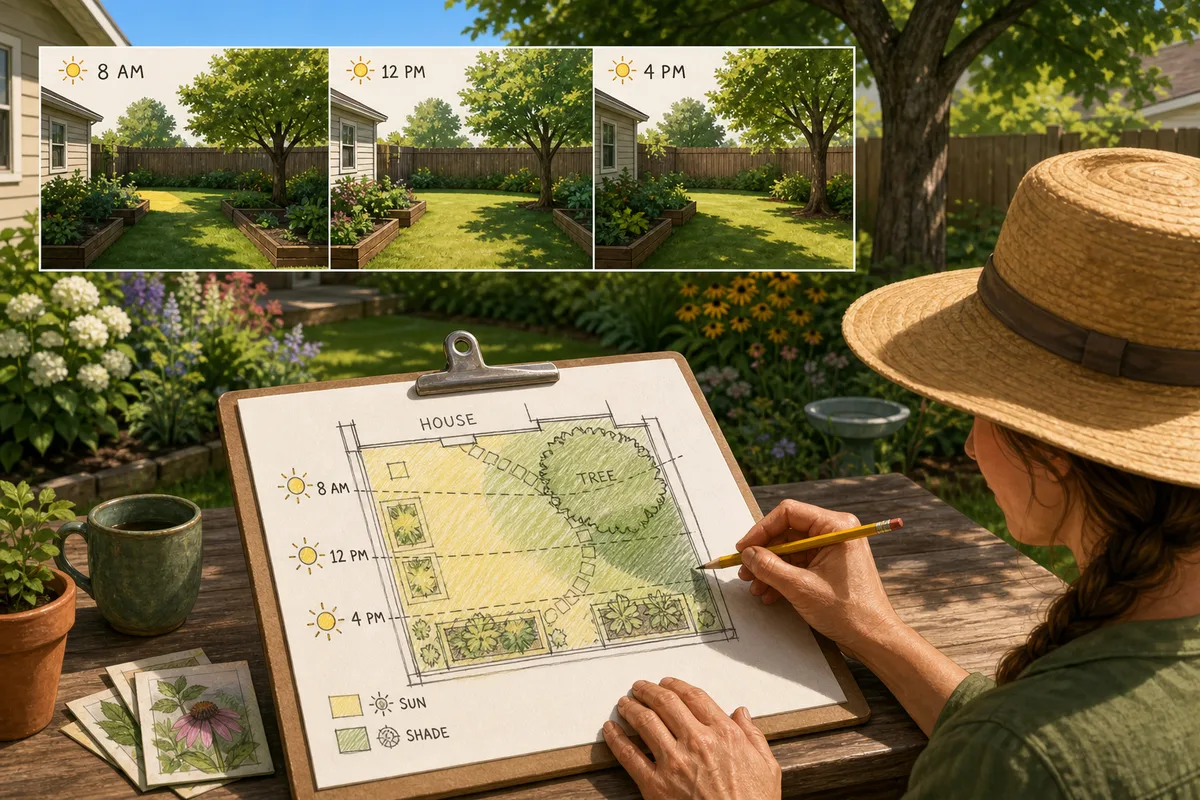 A gardener mapping sun hours on a sketch of their yard
The method is simple. On a clear day, sketch a rough outline of your yard or the bed you care about on a sheet of paper. Then go out roughly every hour from morning to evening and mark, for each spot you are considering, whether direct sun is actually hitting it right then, not "is it bright," but "is the sun landing here." A spot in the shadow of the house or a tree gets a shade mark; a spot with sun striking it gets a sun mark. Do this across the day and then count the sun marks for each spot. That count, in hours, is your real number. It is almost always different from what you would have guessed, and usually lower.
A few things I have learned doing this that make it more accurate:
- Note where the shadows come from, not just that they exist. A shadow cast by a deciduous tree that is bare in early spring will not be there once the tree leafs out. So a bed that reads as full sun in April can be half-shaded by June. A shadow cast by your house or a fence, on the other hand, is permanent and will only shift with the seasons, never disappear.
- Map the light in the month you will actually be growing. The sun sits at a different height in spring, midsummer, and fall, and the shadows swing with it. A spot mapped in early spring, when the sun is low, can gain or lose a couple of hours by high summer. If you are planting a summer crop, the summer map is the one that counts. This is the same reasoning behind sizing and siting a bed carefully in the first place, which I go into in the guide to planning a backyard vegetable bed.
- Watch for reflected and blocked light you would not expect. A light-colored wall can bounce extra light and heat into a bed beside it, effectively boosting a spot. A neighbor's tall hedge or a new shed can quietly steal your afternoon sun. These are the surprises that make a spot behave differently than its compass direction suggests.
You do not have to do this for the whole yard at once. Do it for the one bed you are about to plant. An hour of walking out with a pencil, spread across a single day, gives you a number you can trust, and it is the foundation for every plant choice that follows. This site's broader walkthrough on starting a home garden leans on this same habit of reading your site before you commit to it, because getting the light right up front prevents most of the season's disappointments.
Reading a plant that's in the wrong light
Even with careful mapping, you will sometimes get it wrong, or a tree will grow, or you will inherit a garden someone else planted. So it helps to read the signals a plant sends when the light is off, because the plant will tell you clearly if you know the language.
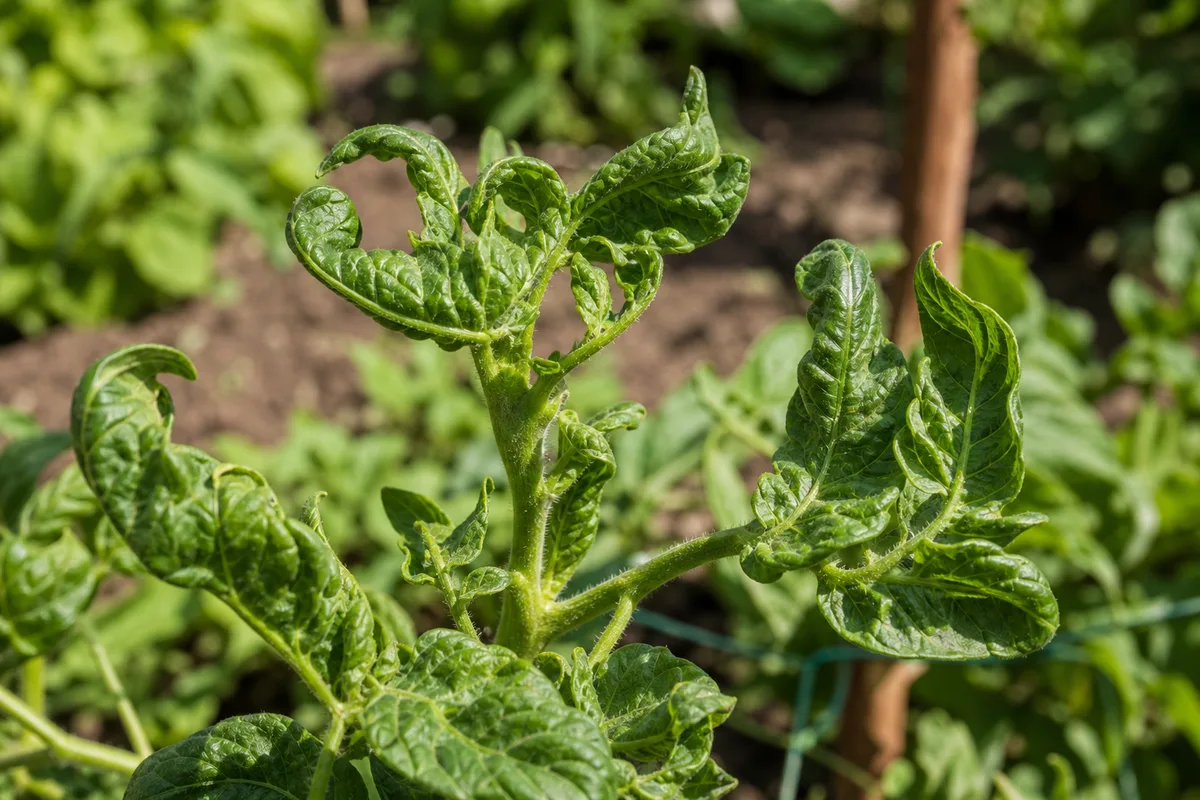
Too little light has an unmistakable look. The plant reaches. Stems stretch longer and thinner than they should, with wider gaps between leaves, as the plant strains toward whatever light there is. New growth comes in pale rather than a healthy deep green, because it cannot build enough chlorophyll to fill out. The whole plant looks leggy and stretched and a little washed out. This is the plant physically trying to relocate itself toward the light it is not getting. Flowering stalls or stops. Fruit does not set or comes in small and sparse.
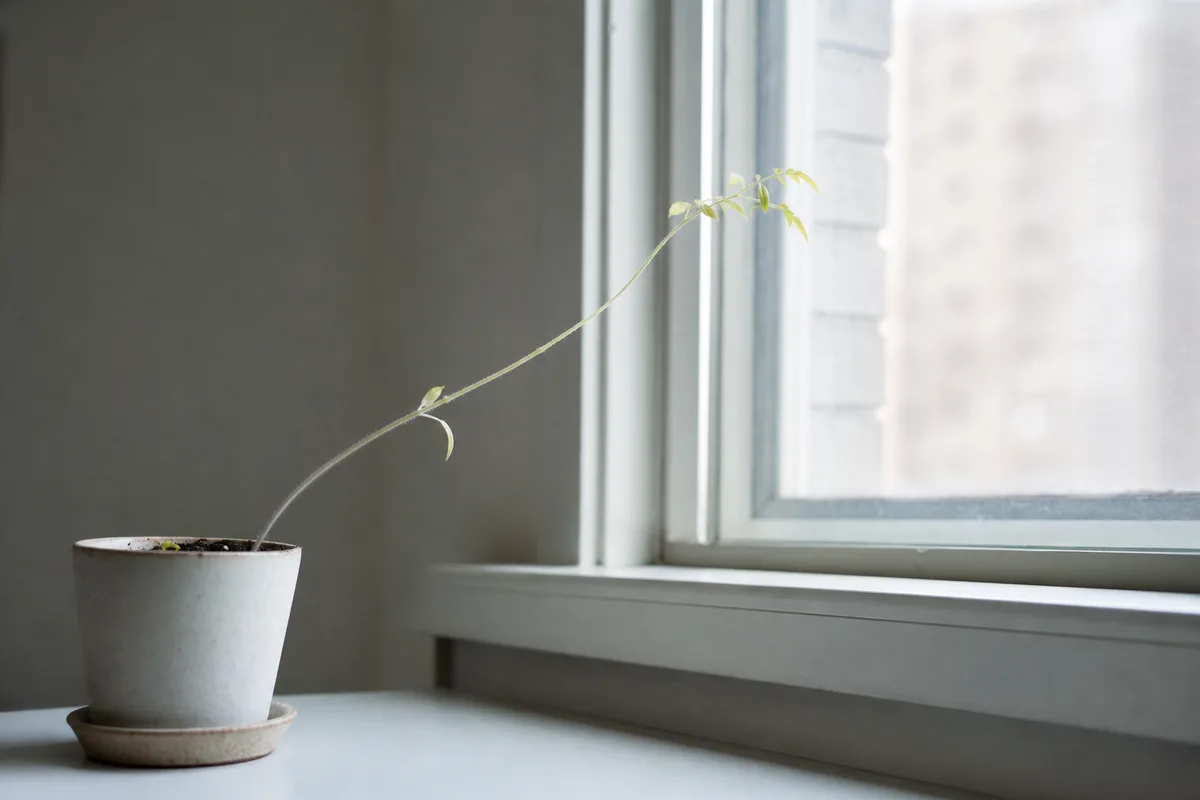 A pale leggy plant stretching toward a window for light
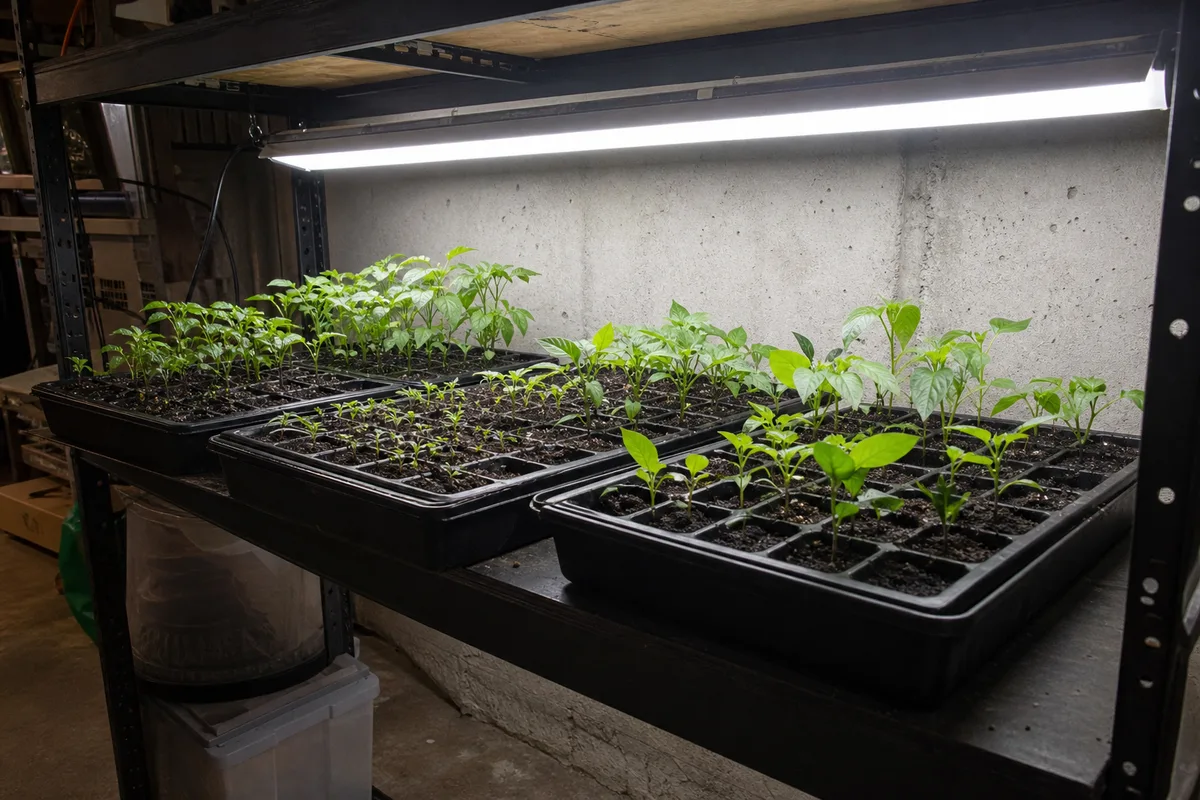
That reaching, pale, leggy look is worth burning into your memory, because it is the same signal indoors and out. A seedling on a windowsill straining sideways toward the glass and a tomato in a too-shady bed stretching between sparse leaves are telling you the identical thing: not enough light. It is exactly the failure that trips up so many people starting plants inside, which is why the guide to starting seeds indoors spends so much time on giving young plants enough light before they ever go outside. And here is the part that saves you money and effort: no fertilizer fixes a light problem. A pale, stretched plant looks hungry, and the instinct is to feed it, but feeding it does nothing because the shortage is light, not nutrients. A hungry-looking plant in a dark corner does not want a bigger dinner; it wants a better address. If the plant is reaching and pale, the answer is more sun or a move, not more food.
Too much light looks different and is less common but real, mostly for shade-loving plants put in harsh sun. The leaves scorch: you get pale, bleached, or crispy brown patches, often on the parts of the leaf most exposed, as if they were sunburned. The plant may wilt in the heat of the day even when the soil is moist, because it is losing water faster than the roots can supply it. If a shade plant looks bleached and crisped in an afternoon-sun spot, it is getting more light than its kitchen can handle, and the fix is shade or a move to gentler morning light.
The judgment call is telling a light problem apart from a water problem, because a wilting plant can be either. The tell is timing and recovery. A plant short on water wilts and then perks back up within an hour of being watered. A plant in too much heat and light may wilt in the afternoon regardless of watering and recover on its own in the cool of the evening. And a light-starved plant does not wilt at all. It stretches and pales slowly over weeks. If watering does not fix it and the plant is stretched and pale rather than droopy, stop thinking about water and start thinking about light.
Matching plants to the light you have
The last and most freeing idea is this: it is far easier to match a plant to your light than to change your light to suit a plant. You cannot move the sun, and cutting down a shade tree to grow tomatoes is rarely a trade worth making. So the winning move is to take the honest number you measured for each spot and choose plants that actually want that amount.
Sort your yard into its real zones. The spots that measured six or more hours are where the demanding sun-lovers go: most vegetables that fruit, and the heavy bloomers. The three-to-six-hour spots are for the flexible middle group, and remember to favor plants for those beds that will accept the specific timing you have, morning versus afternoon. The under-three-hour spots are not failures or dead zones; they are homes for shade-tolerant plants, and trying to force a sun-lover there just guarantees a season of watching something struggle. There is no shame in a shady yard. There is only the mistake of planting it as if it were a sunny one.
When you shop, read the tag the way you now can. See "full sun" and translate it on the spot to "needs six-plus hours: do I have a bed that measured that?" instead of "needs a bright-looking spot." If your best bed only measured four hours, you are not shut out of gardening; you are steered toward the leafy crops and the plants that do fine on four, and away from the fruiting sun-hogs that would have disappointed you. Matching the plant to the measured light is the whole game, and it is why two gardeners with identical skill get completely different results: one read the light and one guessed.
A couple of honest limits to close on. Light is the biggest single factor in whether a plant thrives, but it is not the only one; the right light will not save a plant in soil that drowns it or a bed that never gets water, and it will not make a plant grow out of its season. Getting the light right is necessary, not sufficient. And your light will change over the years as trees grow and structures go up, so a spot that works today may need a rethink in five years, worth a glance each spring. If you want the fuller picture of how light fits alongside soil, water, and the rest of a first garden, the overview on starting a home garden ties the pieces together. But if you take one habit from all of this, make it the pencil-and-paper sun map. Count the real hours, match the plant to them, and most of what used to go mysteriously wrong simply stops.