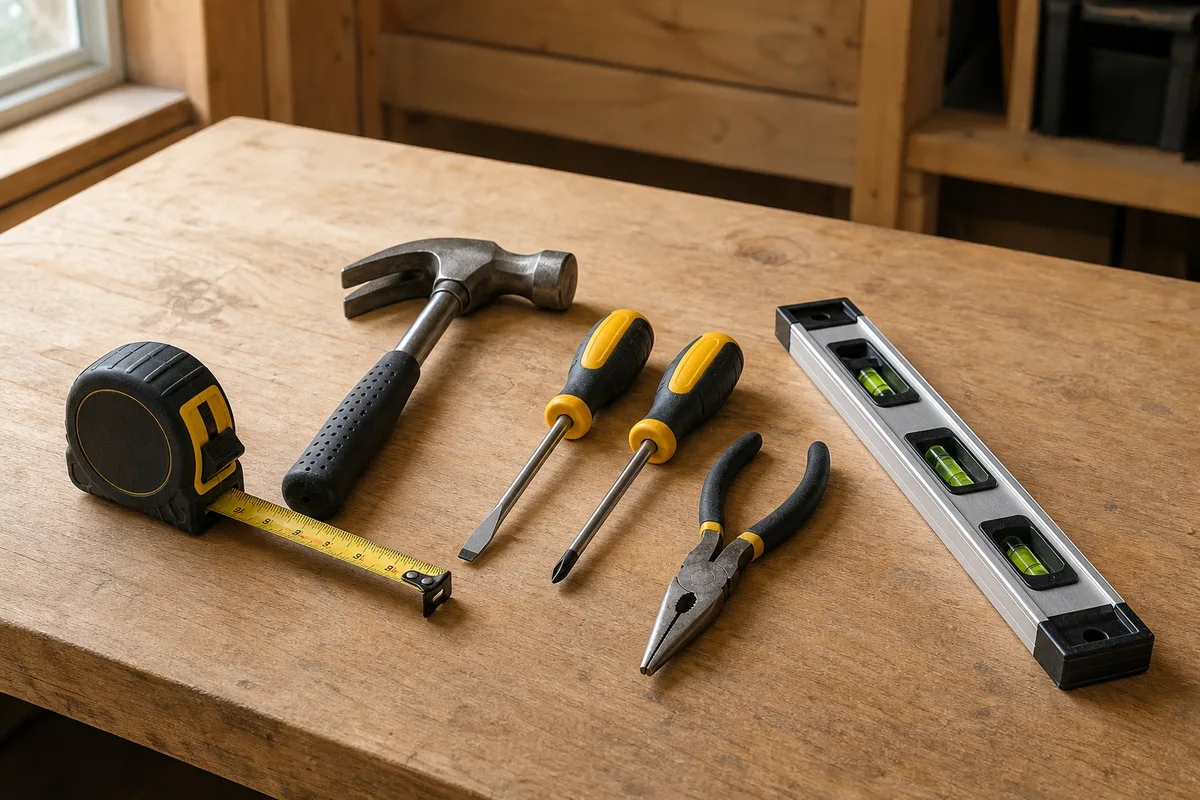
The first tool kit I ever bought was a 200-piece set in a blow-molded plastic case, and I still remember the satisfying weight of it in the store. Within two years I had thrown out or ignored most of it, and the tools I actually reached for every week I had gone back and bought again, separately, at better quality. That is the expensive way to learn a simple lesson: a starter kit is not a box you buy, it is a short list you assemble. This article is the list I wish someone had handed me, split into where your money matters and where it plainly does not.
The goal here is not to talk you into more. It is to get you a kit that handles roughly eighty percent of the small jobs in a house, lasts for decades, and does not include a single tool you will never touch. Some of that means spending a little more than the cheapest option. A lot of it means spending nothing extra at all, because the cheap version is genuinely fine. I will be clear about which is which, and honest about where the pre-made sets are actually a reasonable shortcut.
The big-box kit temptation
Walk into any home center and the tool aisle is engineered to sell you a number. The 200-piece set costs a little more than the 100-piece set, which costs a little more than the 60-piece, and the math feels obvious: more pieces, more capability, better value per piece. That instinct is exactly what the packaging is built to trigger, and it is wrong more often than it is right.
Here is what those piece counts are actually made of. Open a typical 200-piece homeowner set and count what is really in there: a screwdriver or two, a small hammer, a tape, a set of pliers, maybe an adjustable wrench, and then a hundred and eighty small items. Screwdriver bits in a dozen sizes you will never fit to a screw. A full socket set in both metric and imperial, most of which will sit untouched because you do not work on cars (and if you do, you already own better sockets than these). Hex keys, a handful of zip ties counted as pieces, a cheap voltage tester, a utility knife with three spare blades counted as three more pieces. The 200-piece sets are padded with bits and sockets you will never touch; you are paying for a case and a number, and the actual tools you will use are often the weakest grade in the box.
That last part is the real cost. To hit a price point while advertising a big number, the maker has to save money somewhere, and it comes out of the tools that matter. The hammer head is a little soft. The screwdriver tips are stamped from cheaper steel and round off after a season of real use. The tape measure's blade has a weak return spring and a hook that wobbles. You do not notice on day one. You notice the first time a screwdriver cams out and chews up a screw head, or the hammer face dings on a hardened nail. So the set that looked like a bargain quietly fails you at the exact tools you use most, while the ninety percent you never opened sits there justifying the price tag.
None of this means those sets are a scam. They are a real product that solves a real problem for someone who wants everything in one purchase and does not care about longevity. But if you are reading a guide on building a kit deliberately, you are not that buyer. You want the handful of good tools without the filler, and you will get a better kit for similar money by choosing the pieces yourself.
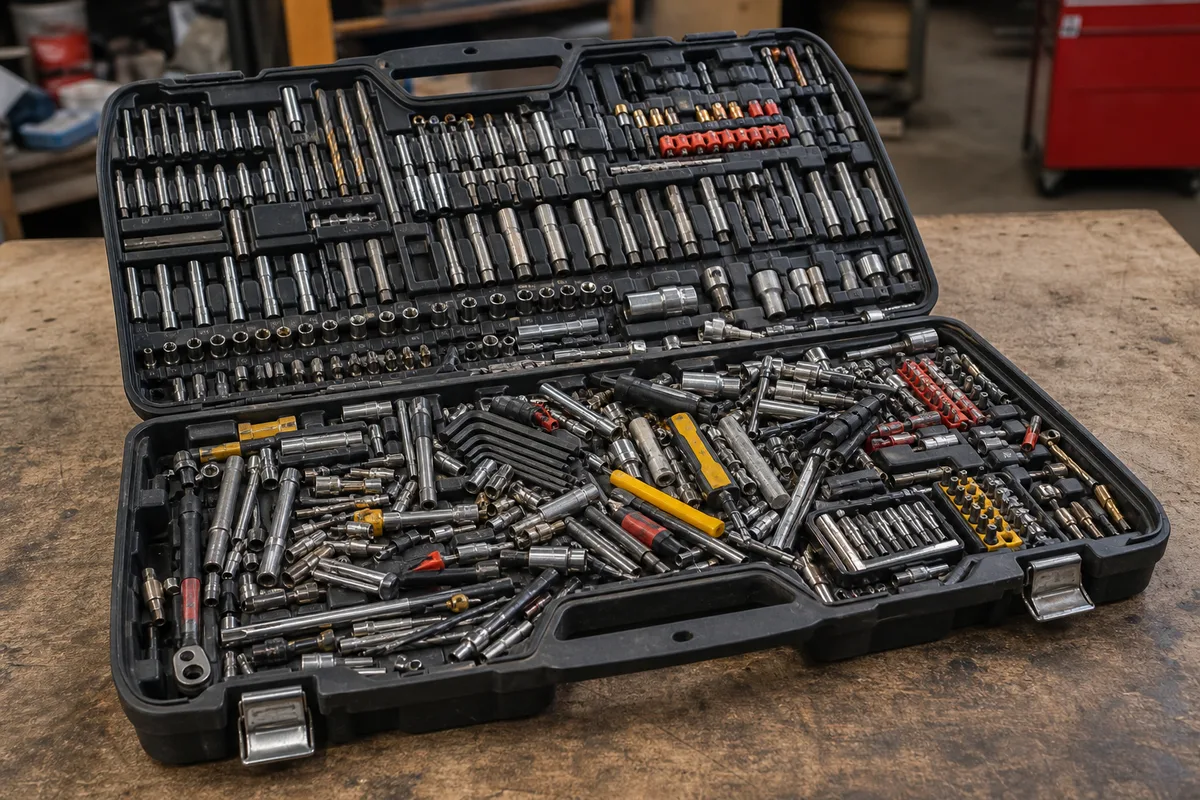 An overstuffed pre-made tool kit case with many small bits
What a real starter kit needs
Strip away the marketing and a genuinely useful home kit is small. It is the set of tools that come up across the ordinary repairs a house asks of you: hanging things, tightening things, measuring, cutting, and the basic plumbing and electrical checks that any homeowner ends up doing. If you have read the companion piece on essential home repair skills, you will recognize that the tools map directly onto those first few skills, because tools should follow the jobs you actually do, not the other way around.
A workable starter kit is roughly this, and it fits in a single bag or a small drawer:
- A tape measure, 25 feet, with a blade that stays rigid when extended a few feet.
- A claw hammer in the 16-ounce range, one you can swing all afternoon without it feeling like a sledge or a toy.
- A screwdriver set covering both common head types in two or three sizes each, or a solid multi-bit driver that does the same.
- Pliers: one pair of slip-joint or tongue-and-groove for gripping and turning, and a pair of needle-nose for small work.
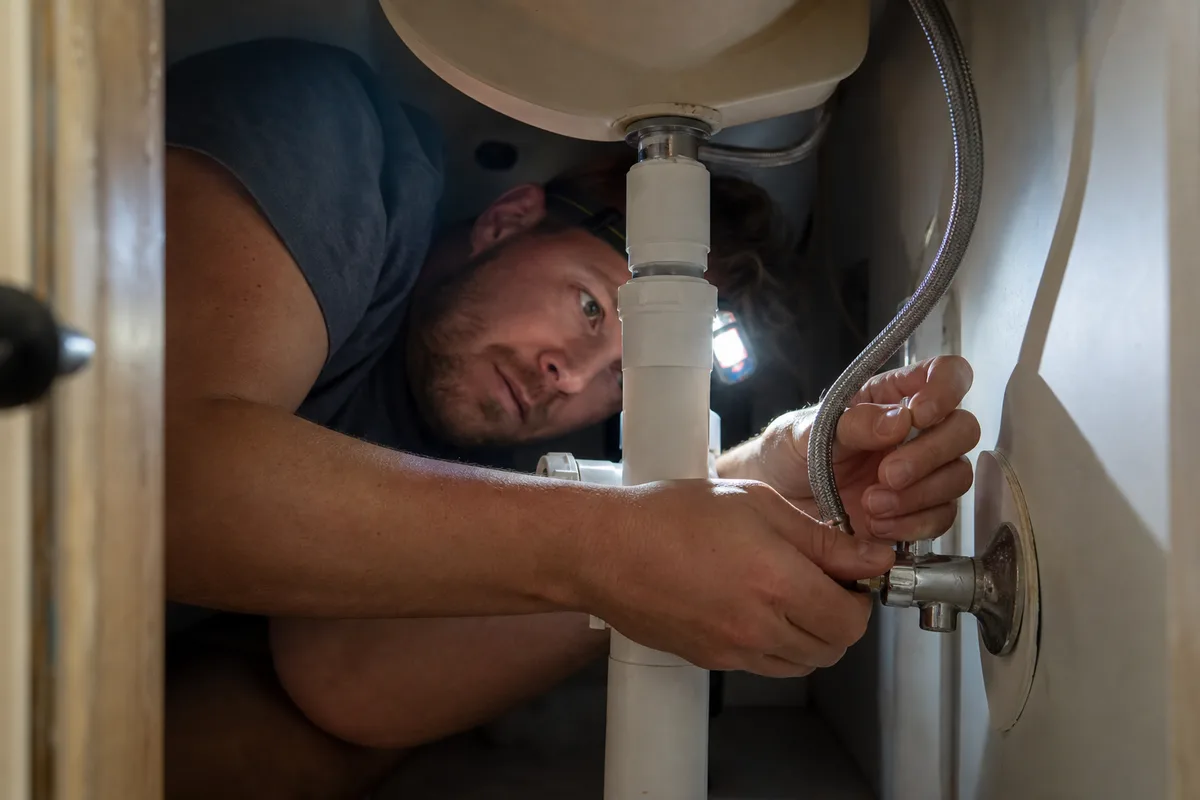
- An adjustable wrench, 8 or 10 inch, for plumbing fittings and bolts.
- A utility knife with a supply of fresh blades.
- A level: a torpedo level for small jobs, and a 2-foot level if you hang shelves and pictures often.
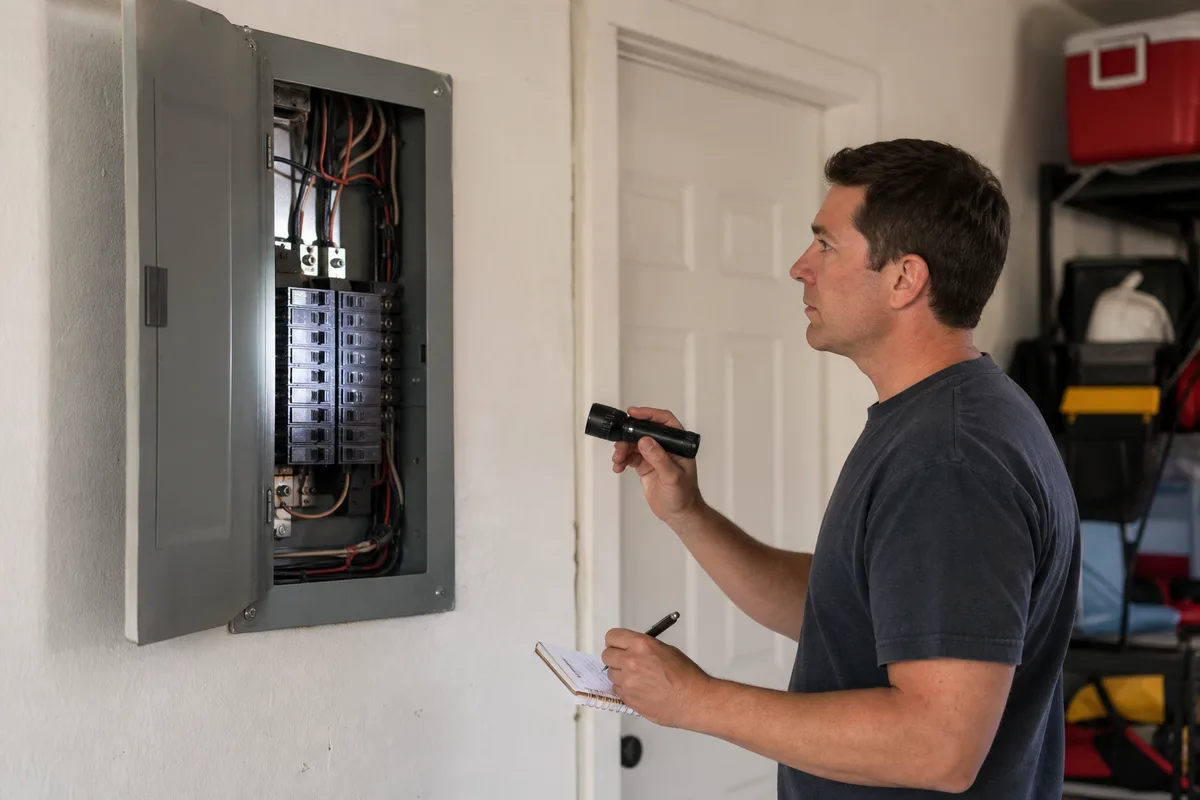
- A non-contact voltage tester, the pen-shaped kind that beeps near live wires.
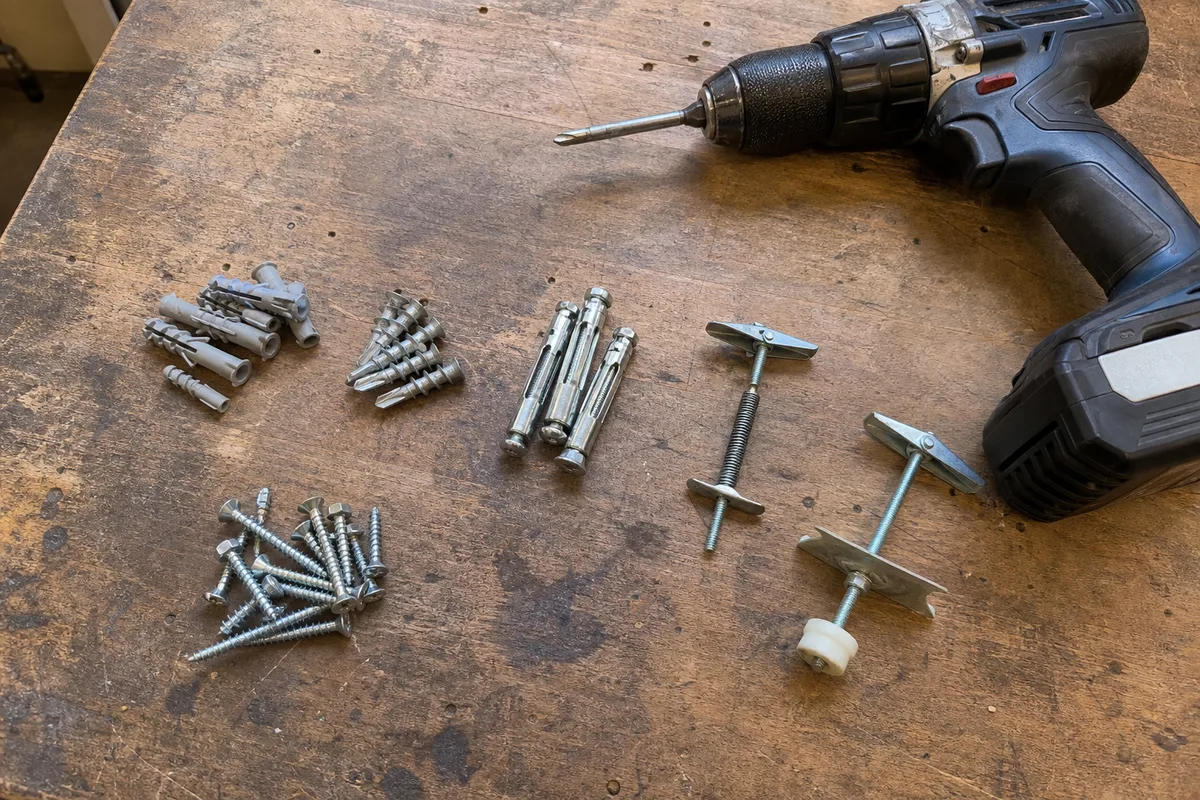
- A basic assortment of fasteners: a jar of common screws, a few wall anchor types, and some picture hangers. The anchors that come in these assortments are usually the weakest kind, so it is worth knowing which anchor suits which load before you trust one with a shelf.
That is close to the whole thing. Notice what is not on it: no cordless drill yet (more on that below), no socket set, no specialty tools. The kit above handles the running toilet, the loose hinge, the sagging shelf, the picture wall, and the mystery outlet, which together are most of what a house throws at a new owner. You add to it as specific jobs demand, not in anticipation of jobs you imagine.
The reason to define the kit this tightly is that it changes how you shop. Instead of asking "what set should I buy," you are asking "what tape measure, what hammer, what drivers," one decision at a time, and each of those decisions has a clear right answer once you know whether it is a spend-here tool or a cheap-is-fine tool.
Spend-here tools and why
There is a simple rule that sorts almost every tool: spend on the tools that transmit force or must stay accurate, and save on the ones that just hold a shape or get used twice a year. A tape measure, a solid hammer, and quality screwdrivers earn the extra money because you use them constantly and because their failure modes cost you real work; skip the premium on a pry bar or a level you pull out a couple of times a year.
Start with the tape measure, which is the tool people most underestimate. A good one has a stiff blade that stays straight when you extend it seven or eight feet unsupported, so you can measure across a room by yourself without a helper or the blade folding over. It has a hook at the end that is riveted with a tiny bit of intentional play. That slop is not a defect, it slides exactly the thickness of the hook so the tape reads true whether you are pushing against an edge or pulling off one. Cheap tapes have a weak return that leaves the blade sagging out, a hook that wears loose so your measurements drift by a sixteenth, and printing that rubs off. You handle this tool more than almost any other, and a bad one introduces small errors into everything you build. It is worth good money.
The hammer is the clearest spend-here case because a hammer is pure force transmission. A quality 16-ounce claw hammer has a properly hardened face that will not chip, a head seated so solidly on the handle it will never work loose, and a balance that lets the weight do the work so your arm does less. A cheap hammer feels almost identical for the first ten nails and then reveals itself: the face is too soft and mushrooms, the claw is set at a poor angle for pulling, or a wooden handle dries and the head starts to loosen. You are swinging this thing with force near your other hand, so a head that stays put is not a luxury. Buy one good hammer and you will hand it down.
Screwdrivers are the third. Whether you buy a set of individual drivers or one good multi-bit handle, the money buys tips machined to actually fit the screw, made of steel hard enough to keep that fit. When a tip is a hair off or the steel is soft, the driver cams out under load (it slips up and out of the screw) and each cam-out rounds the screw head a little more until you cannot turn it at all. A precise, hard tip grips and stays gripped. Since driving screws is half of home repair, this is not a place to save a few dollars.
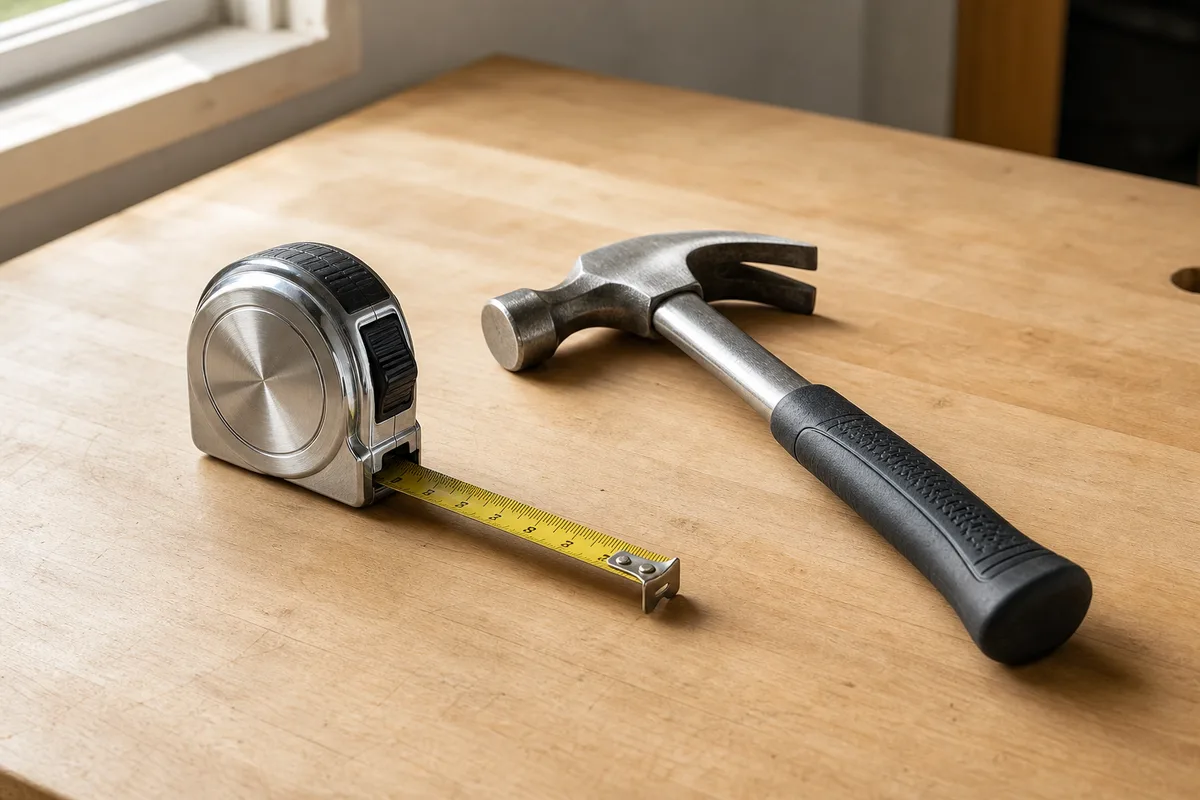 A quality tape measure and hammer, tools worth spending on
A short word on what "spend" means here. It does not mean buy the most expensive professional brand. For these tools, the gap between a genuinely bad one and a genuinely good one is small in dollars, often the difference between the bottom shelf and the middle shelf, not the top. You are stepping past the cheapest option, not chasing the priciest. The value curve flattens fast: a mid-tier tape or hammer from a reputable maker is most of the way to a professional one for a fraction of the price, and for home use you will never find the ceiling of what it can do.
Cheap-is-fine tools and why
The flip side of that rule is just as useful, and it is where you claw back the money you spent above. Plenty of tools do a job that does not care about precision or the quality of their steel, and for those the cheapest reasonable version is genuinely all you need. Being honest about this is what keeps a deliberate kit from becoming an expensive hobby.
A pry bar is the classic example. It is a bent piece of steel used to lever things apart with brute force. There is no accuracy to preserve and almost nothing to wear out; a five-dollar flat bar pries as well as a thirty-dollar one, and you might use it three times a year. It has one job and no opinions about it, so buy the cheap one without a second thought. The same goes for a putty knife, a scraper, a set of hex keys, a chisel you only use for the occasional rough job, and most clamps for light holding. These either apply crude force or hold a static shape, and premium versions add cost without adding anything you will feel.
A level is a more interesting case because you would think accuracy matters, and it does, but a decent budget level is accurate enough for hanging a shelf or a picture, and you will rarely stress it beyond that. Unless you are doing finish carpentry where a level has to read true across a long span, the inexpensive torpedo level in the bin near the register is fine. Check it once in the store by setting it on a flat surface, reading the bubble, then flipping it end for end in the same spot; if the bubble reads the same both ways, it is true. That thirty-second test matters more than the price.
Pliers for occasional gripping, a utility knife (the blade does the work, and blades are cheap and replaceable), a hand saw for the rare cut, a tape of masking or painter's tape, safety glasses, work gloves. These are all commodity items where the cheap version does the job. The one caution is to separate "cheap tool, fine" from "cheap tool, dangerous." A budget hammer is merely worse; a budget ladder or a budget knife with a blade that folds shut on your hand is a different category, and there you buy for the mechanism, not the price. But for the ordinary hand tools that just push, hold, or scrape, spend as little as you like and put the savings toward the three tools that earned it.
The cordless drill sits in its own spot between these tiers. It is worth buying decently but it is not a day-one purchase, and the choice of platform matters more than the price of the drill itself. Because that decision (voltage, battery system, brand lock-in) deserves its own reasoning, I have kept it out of this list and put it in the guide to choosing a cordless drill, which is worth reading before you commit to one, since the battery you buy into is a longer marriage than the drill.
Where pre-made kits waste money
It is worth being precise about how a pre-made set wastes money, because "they're padded" is easy to say and easy to wave off when you are standing in the aisle looking at what seems like a lot of tools for the price. There are three specific ways the money leaks, and seeing them named makes them hard to unsee.
The first is the filler itself. A large fraction of the piece count is items you already established you will not use: automotive sockets, redundant bit sizes, throwaway consumables counted individually to inflate the number. You paid for all of it. Even if each piece cost pennies, the pennies add up to real money that bought you nothing, and worse, they take up the space and the case you are also paying for.
The second is the quality dilution on the tools you do use. This is the expensive one. Because the set has to hit a price while advertising a big number, the maker economizes on the few real tools, so the tape, the hammer, and the drivers, the exact spend-here tools, arrive at the weakest grade. You end up replacing them within a couple of years, which means you paid for them once inside the kit and again as standalone tools. The set did not save you the cost of good tools; it added a layer of bad tools on top.
The third is the false sense of completeness. Owning a big case makes people feel equipped and stop thinking about what they actually need, so they never get around to buying the one genuinely good screwdriver, and they limp along with the soft-tipped set for years. A full case turns out to be a very convincing way to stay badly equipped. The kit that felt like a head start quietly holds you at a lower grade.
I want to be fair, because there is a real exception. If your honest goal is simply to have a screwdriver and a hammer somewhere in the house for the rare tightened-hinge emergency, and you will never do real repair work, a modest pre-made set is a reasonable, low-effort choice, and I would not talk you out of it. The waste only bites when you are trying to build a kit that lasts and does real work. Then the padding and the diluted core tools cost you both money and results. Know which buyer you are before you decide the set is a mistake.
Building the kit over time vs all at once
There are two ways to assemble the kit, and both are valid depending on your temperament and your budget. Buying it all in one afternoon has the appeal of being done; buying piece by piece as jobs arise has the appeal of never owning a tool you do not need. I have done it both ways and I lean toward the second, for reasons that go beyond money.
Buying as needs arise (going to the hardware store for the specific tool a job requires, the day you need it) has a hidden benefit: every tool you own has already proven it earns its place, because you bought it for a job you actually faced. You never accumulate the speculative tools that clutter a kit. The downside is real too: you make more trips, you occasionally start a job and have to stop to go buy the tool, and buying one tool at a time forgoes any set discount. For a homeowner who does a handful of small repairs a year, that trade is usually worth it, and it spreads the cost out so the whole kit never lands as one intimidating bill.
Buying a core set up front makes sense if you know you are about to do a run of projects (you just moved in and there is a list) and the friction of stopping mid-job to shop would genuinely slow you down. If you go this way, do it by buying the individual spend-here tools deliberately plus a small handful of the cheap-is-fine ones, not by grabbing a 200-piece box. You get the readiness of having everything without the filler and the diluted core.
Whichever path you take, there is one specific tool to buy ahead of need, and it is the exception to the whole "only buy what a job demands" philosophy: buy the second tape measure before you think you need it. The tape measure is the single most-lost tool in a house. You set it down on a job, walk away, and it is gone into a couch cushion or a coat pocket or the garage, and the next time you need to measure something you spend ten minutes hunting for it. No one in the house will admit to moving it, and yet it moves. A second tape, kept in a different room or a different bag, means you are never stalled looking for the one that wandered off. It costs little and it saves the exact kind of small, repeated time waste that makes people give up on doing their own work. A spare tape is the cheapest productivity you can buy.
The broader principle across both approaches is to resist buying for the fantasy version of yourself who does elaborate projects, and buy for the actual person who fixes what breaks. The fantasy buys a table saw and a full socket set. The actual person needs a good tape and a driver that fits the screw. Let the actual jobs pull tools into your kit, and the kit stays lean and every tool in it stays used.
Storage that keeps the kit usable
A kit you cannot find is barely a kit. The point of storage is not tidiness for its own sake; it is that the tools are ready the moment you need them, so a five-minute repair stays five minutes instead of becoming a twenty-minute search followed by a five-minute repair. How you store the kit depends mostly on how big it is and where you work.
For a small starter kit, a soft tool bag or a single tote is the honest right answer, and it beats the blow-molded case the tools may have come in. The case is molded to hold exactly the original tools in exact spots; the moment you add a tool or lose one, the layout fights you, and you end up not putting tools back because they do not fit the slot. The empty foam cutout where the lost tool used to live just sits there like a little outline for a tool that is never coming back. A bag with a few open pockets flexes with the kit. It also travels. You carry the whole kit to the job instead of making trips back to a fixed box. Look for one with a rigid bottom and pockets around the inside wall, and keep the tools you grab most in the outer pockets where you can see them.
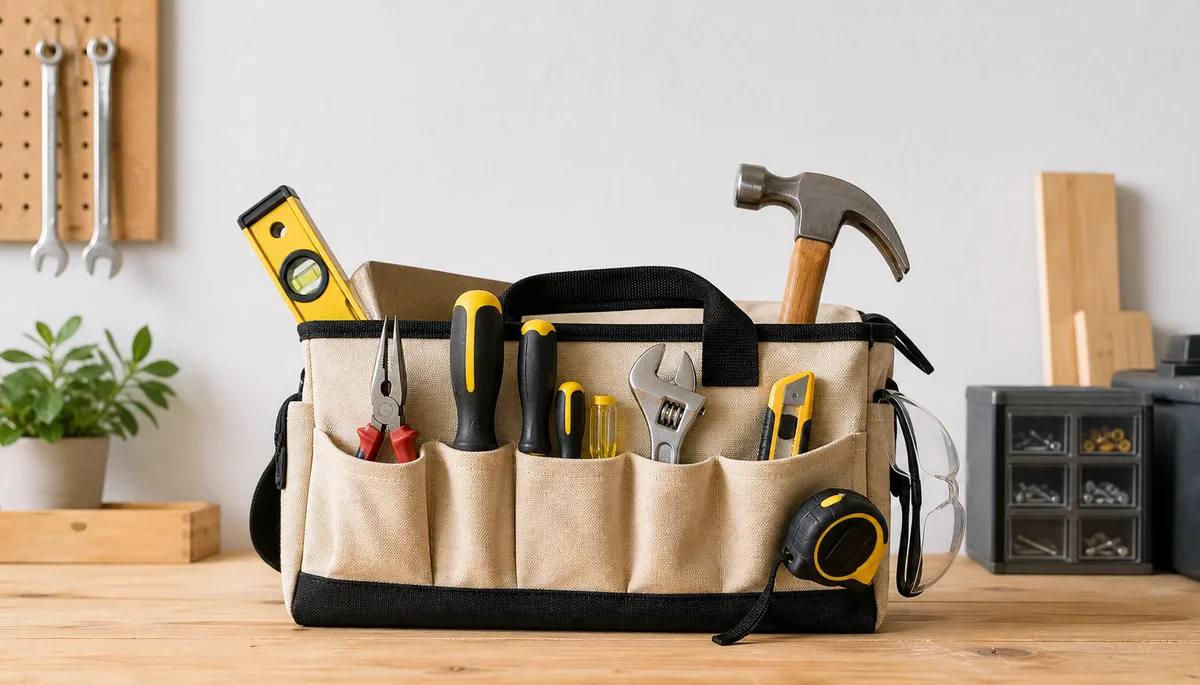 A simple tool bag holding a starter home tool kit
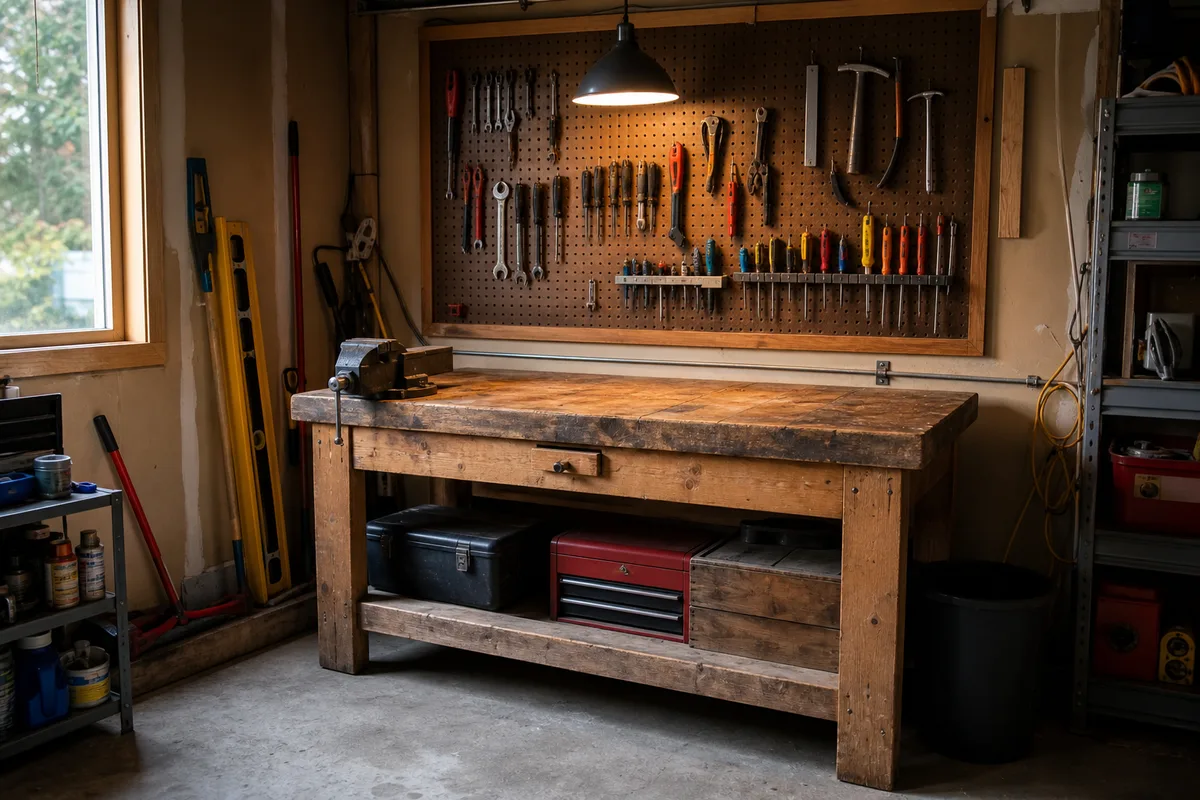
As the kit grows past what a bag holds comfortably (and it will, once you have done enough jobs), a wall-mounted rack or pegboard in a garage or utility area starts to make sense, because it turns storage into a visible inventory. When each tool hangs in its own spot, a missing tool announces itself as an empty hook, which is how you catch the tape measure walking off before it is lost for a week. The full reasoning on organizing a bench, wall storage, and a real work surface is in the guide to setting up a home workshop, and it is worth reading once your tools outgrow a drawer.
A couple of small habits do more for usability than any product. Keep the fasteners (the screws, anchors, and hangers) in a small divided box rather than loose in the bag, because loose fasteners migrate to the bottom and turn every job into a rummage. And pick one home for the kit and return it there every time, even when you are tired and the job ran long. The discipline of putting the kit back in one place is worth more than any clever storage system, because the best-organized bag in the world does not help if you cannot remember which room you left it in.
A sensible first shopping list
Here is the concrete starting point, gathered from everything above. This is what I would tell a new homeowner to walk out of the store with, and roughly how to think about each line. The whole list, bought at sensible quality, lands in a similar range to a mid-tier pre-made set, but every tool in it earns its place.
- A 25-foot tape measure: spend here. Get one with a stiff blade and a solid hook. Then, when you can, buy a second cheaper tape to keep in another room, because this one will wander off.
- A 16-ounce claw hammer: spend here. One good hammer, properly balanced, with a head that will never loosen.
- A screwdriver set or multi-bit driver: spend here. Both common head types in a couple of sizes, with tips hard enough to keep their fit.
- Tongue-and-groove pliers and needle-nose pliers: cheap-is-fine for the needle-nose; mid-grade for the tongue-and-groove since you will lean on it for plumbing.
- An 8-inch adjustable wrench: mid-grade. Smooth jaws that close square matter more than brand.
- A utility knife with spare blades: cheap-is-fine on the knife, and never skimp on fresh blades since a dull one slips.
- A torpedo level: cheap-is-fine, but do the flip test in the store to confirm it reads true.
- A non-contact voltage tester: inexpensive and non-negotiable for any electrical work; test it on a known-live outlet before you trust it.
- A pry bar and a putty knife: cheap-is-fine, both. Buy the least expensive reasonable versions.
- An assortment of screws, wall anchors, and picture hangers in a small divided box, so you are not stopping mid-job.
- A soft tool bag to hold it, chosen over any molded case.
The cordless drill is the deliberate omission, useful, worth buying decently, but a second-stage purchase you make after you have felt where the hand tools leave off, and after you have read up on which battery platform you want to be tied to.
Two honest alternatives are worth naming before you spend anything at all. If money is tight or you would rather test whether you will actually do this work, buy piece by piece from a hardware store as each job comes up, the slower path that guarantees you never own an unused tool. And for the tools that last generations, check estate sales and garage sales for solid old hand tools; an old forged hammer, a good square, a set of pliers from a home being cleared out are often better made than a new budget equivalent and cost a fraction. For the rare specialty tool you need once, a tool library (where they exist in your area) lets you borrow it for nothing rather than buying a tool to use a single afternoon. A deliberate kit does not have to mean buying everything new, and often the best tools in a homeowner's bag are the ones that were already broken in by someone else.
The whole philosophy comes down to a sentence: buy few tools, buy the important ones well, buy the rest cheap without guilt, and let real jobs decide what joins the kit next. Do that and the box you never open in the corner of the garage stops being a monument to money spent, because you never bought it in the first place.