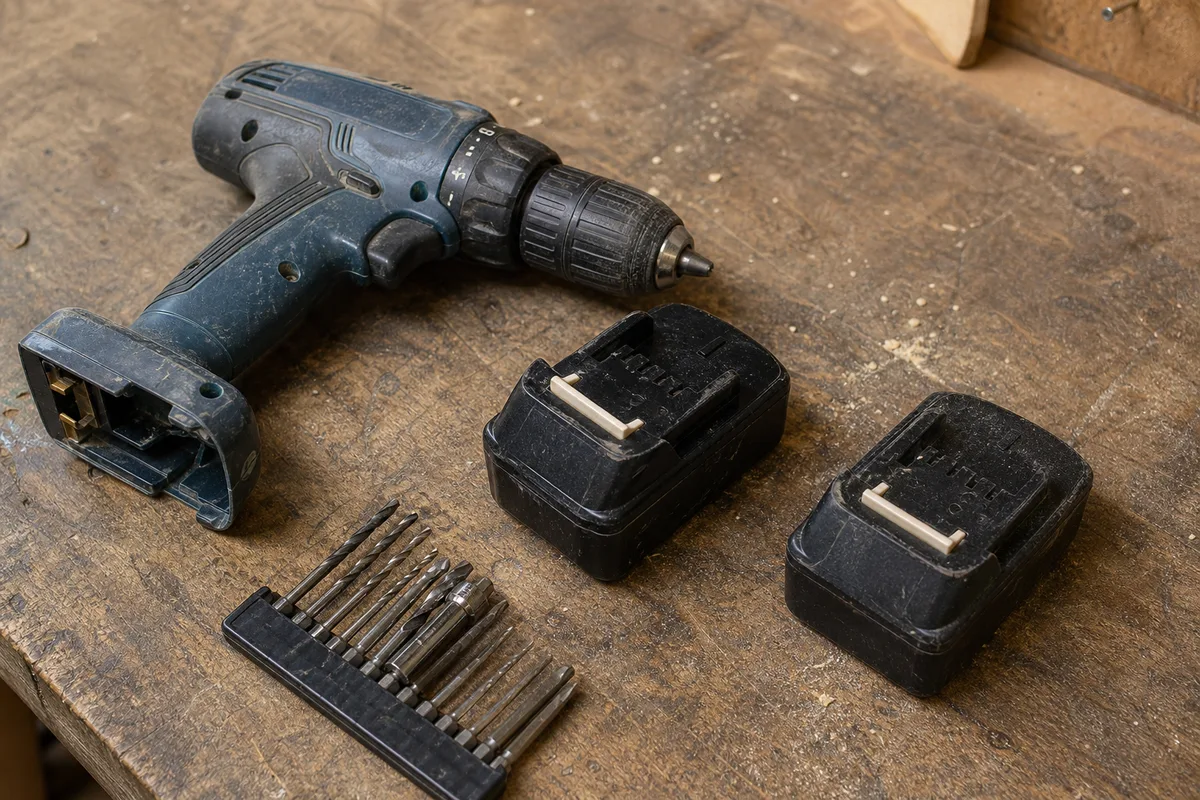
Most people walk into the drill aisle and walk out having bought a number. The box says 20V, the one next to it says 24V, and somewhere behind them a 40V model in a bigger case is quietly implying that more is better. It usually is not, at least not for the work a homeowner actually does. I have owned and worn out a handful of drills over the years, lent them to neighbors, and watched people spend real money on the wrong thing, and the pattern is always the same: they buy voltage and weight they never use, and they skip the two features that would have made every job easier.
This guide is about cutting through that. There are really only three things that matter when you pick a drill for home use, and none of them is the biggest number on the box. I will name them, tell you what is mostly marketing, and be honest about where the pricey pro tiers stop being worth it. I will also point you to genuinely cheaper paths, because for some people the right answer is not a cordless drill at all.
The decision behind the voltage numbers
The voltage on the box is the spec that gets the most attention and deserves the least. For context, voltage roughly tracks with how much twisting force the motor can deliver and how heavy the tool is. Higher voltage tools spin bigger fasteners and bore bigger holes, and they weigh more and cost more to do it. That is the whole trade, and once you see it that way the marketing loses most of its grip.
Here is the part the aisle will not tell you plainly. For hanging shelves, assembling furniture, driving deck screws, drilling into wood and drywall, and the occasional hole in a stud, an 18V or 20V drill with two batteries covers almost everything a home throws at it. The 18V and 20V labels, by the way, describe the same class of tool measured two different ways, so do not let that two-volt gap sway anything. The higher voltage pro tiers, the 36V and 40V machines built for framing crews and concrete, add weight and cost you will feel in your wrist and your wallet and rarely need. I have driven hundreds of screws with an 18V drill and never once wished for more power. I have, however, set down a heavier tool halfway up a ladder because my arm was done.
There is one honest exception worth naming. If you already know you will be doing heavy, repeated boring into old hardwood or masonry, or running large hole saws, the extra headroom of a higher tier earns its keep. But that is a specific plan, not a default. Buy for the work in front of you, not for a version of yourself who might someday build a deck.
How you'll actually use it
Before you compare a single spec, be honest about your use pattern, because it changes the right answer more than any feature does. Sit down and think about the last twelve months in your house. How many times did you actually need to drill or drive something? For a lot of homeowners the honest count is a dozen times a year: a few pictures, a curtain rod, a piece of flat-pack furniture, tightening the hardware on a cabinet. That is not neglect, it is just what a house needs, and the tool should be bought to match it rather than to impress the neighbor who does more. For others who tinker most weekends, it is several times a week.
Those two people should not buy the same tool. The once-a-month homeowner needs something light, cheap, and ready when they grab it. The weekend builder needs something that shrugs off repeated hard use and has a battery system they can grow into. Most of the regret I see comes from the first person buying the second person's tool because a review told them to.
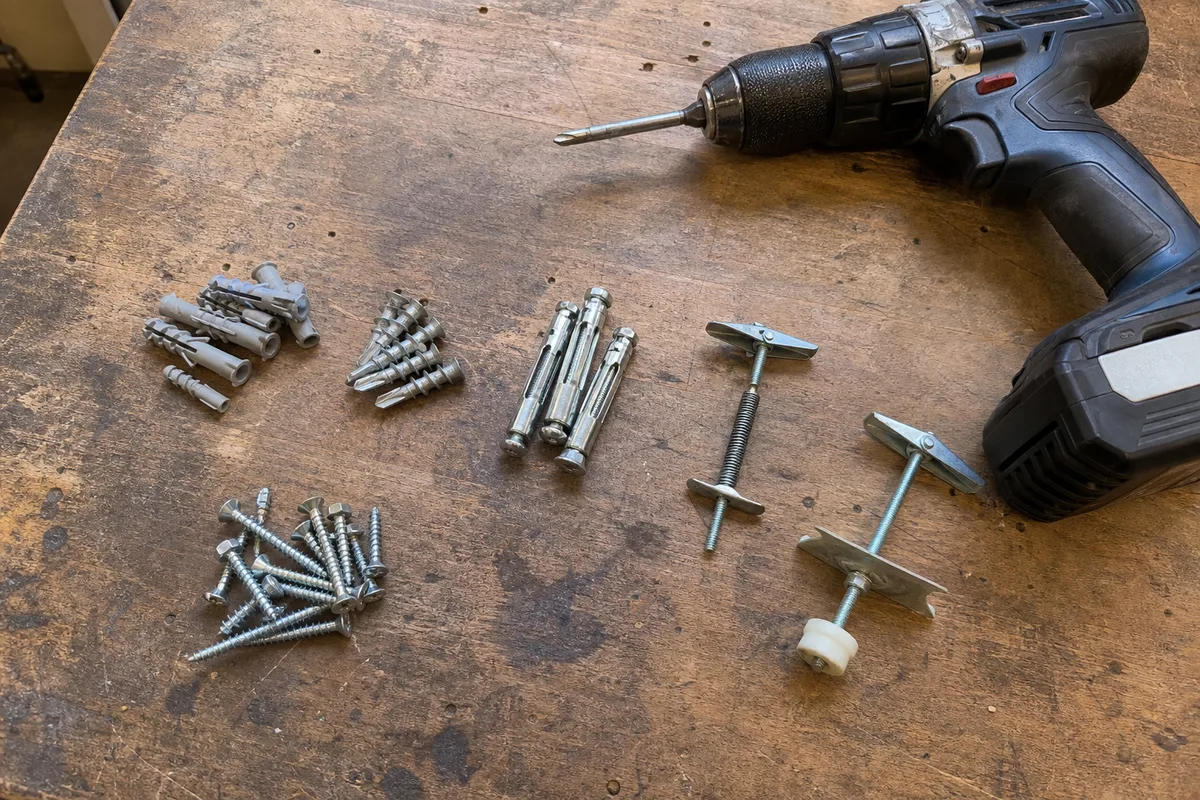
The other half of your use pattern is what you drill into. Wood, drywall, and driving screws are the gentle end, and almost any drill handles them. Brick, tile, concrete, and steel are the hard end, and they demand either a hammer-drill function or a proper masonry approach, plus the right bits. If you have a brick exterior you want to mount things to, note that now, because it narrows your choices. The everyday indoor work this connects to is the same territory as the fastening and mounting skills covered in the guide to essential home repair skills; a drill is the tool that makes most of those jobs faster, not a job of its own.
One more practical note on use: a drill lives in a drawer or on a shelf between jobs, sometimes for months, quietly forgetting it was ever charged. That storage reality is why battery type matters, and it is why the tool that is always charged and light enough to grab beats the more powerful one that is buried in a case with a dead pack.
What matters: chuck, clutch, battery
If you ignore the voltage war and look at what actually makes a drill pleasant and versatile to use, it comes down to three things. Get these right and you will be happy with a modest tool. Get them wrong and no amount of voltage saves you.
The chuck is the jaw at the front that holds the bit. For home use you want a keyless chuck, which every modern drill has, and you want a half-inch capacity rather than the smaller three-eighths. The half-inch number refers to the largest bit shank the jaws will grip, and the reason it matters is not that you will constantly use big bits; it is that a half-inch chuck accepts everything a three-eighths does plus the larger spade bits and hole saws you will eventually want. It costs little to nothing extra and it removes a future limit. A cheap chuck also tends to let bits slip or wobble, so if you get to hold the tool, chuck a bit in and wiggle it. Play at the chuck becomes a wandering hole in your work.
The clutch is the ring of numbers behind the chuck, and it is the single most underappreciated feature on the tool. It sets how much twisting force the drill delivers before it slips and stops driving, which is what keeps you from sinking a screw head straight through a cabinet door or snapping the screw off flush. A low number gives gentle force for small screws and soft material; a high number, plus the separate drill symbol that locks the clutch out entirely, gives full power for boring holes. Learning to dial the clutch to the job is the difference between clean work and stripped screw heads. A drill with a vague or coarse clutch, one that jumps from too gentle to too much, will frustrate you on every delicate job.
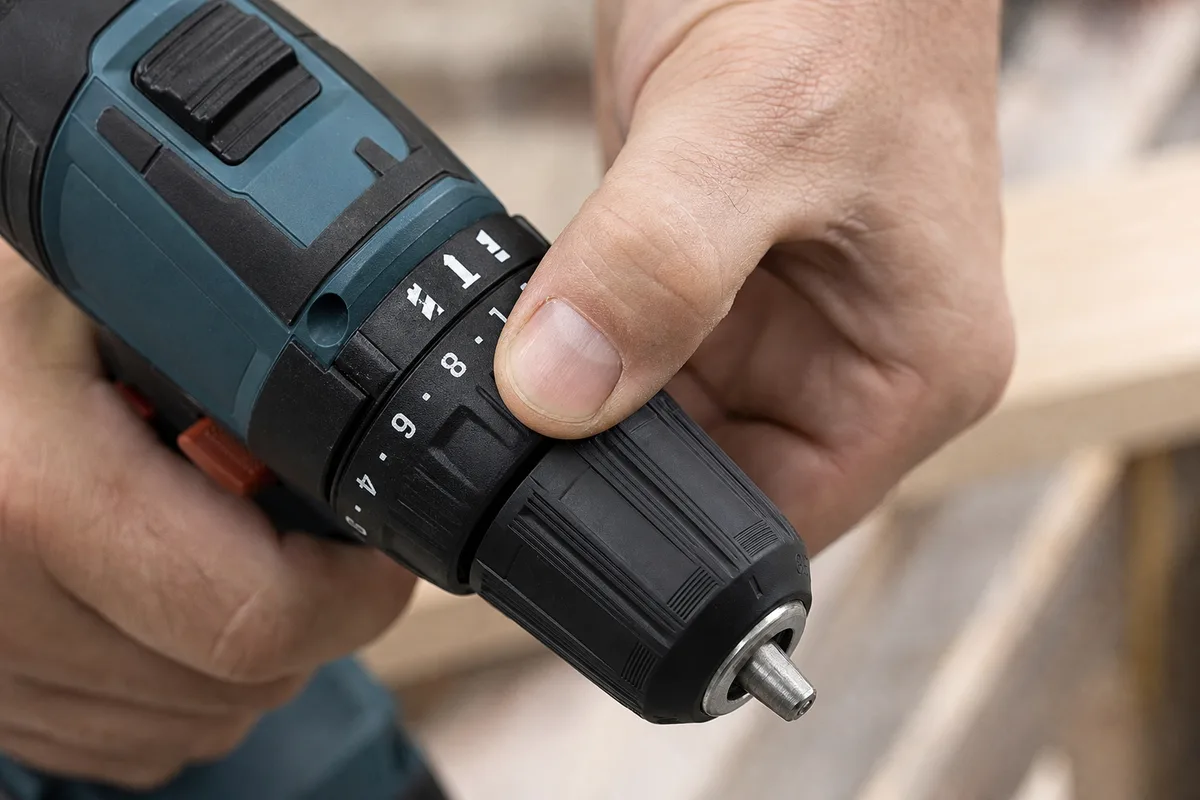 Adjusting the clutch setting on a cordless drill
The battery is the third thing, and I mean the platform more than the specific pack, which gets its own section below because it is that important. For the tool in your hand, what matters is that lithium-ion batteries have largely settled the old problems: they hold a charge in the drawer for months, they do not develop the memory issues older packs had, and a two-battery setup means one charges while the other works. If a kit comes with a single battery, factor in buying a second, because a drill with one battery is a drill that is dead exactly when you need it. Two modest batteries beat one large one for real-world use nearly every time.
The one battery number worth understanding is amp-hours, printed on the pack as something like 2.0Ah or 4.0Ah. It is a capacity measure, roughly how long the pack runs before it needs charging, not how strong the drill is. Bigger packs run longer and weigh more, and this is where two modest batteries earn their place: a pair of 2.0Ah packs gives you a light tool in the hand and a fresh one on the charger, whereas a single heavy 5.0Ah pack makes the drill front-heavy for the overhead work where you least want the weight. For home use I would take two small packs over one large one and never look back. Save the big-capacity packs for a tool that genuinely drains them, like a saw.
What's mostly marketing
Plenty of what drives the price up does little for the homeowner. Knowing what to ignore is how you avoid paying for a professional tool you will use like a casual one.
Raw voltage above the 18/20V class is the biggest one, for all the reasons above. Past that class you are paying for capability aimed at trades.
Torque figures quoted in isolation are close behind. Manufacturers publish peak in-lb numbers that look impressive and are measured under conditions you will never reproduce. A home drill with a good clutch and enough torque to drive a three-inch screw into a stud has all the torque you need; the marketing number beyond that is a bragging right, not a benefit.
Speed settings past the basic two are mostly noise. You want a low range for driving with control and a high range for drilling, and a two-speed gearbox gives you exactly that. Fancier speed electronics rarely change the outcome on home jobs.
Built-in features that sound clever deserve a squint. A little worklight at the front is genuinely useful and I would not skip it. But things like app connectivity, drive-mode presets, and elaborate displays add cost and failure points for benefit you will likely never touch on the kind of work a house needs. No shelf has ever gone up straighter because the drill could talk to a phone. The same restraint that keeps you from over-buying tools in general applies here; a well-organized modest kit, the kind described in the guide to setting up a home workshop, serves you better than one expensive tool loaded with features you ignore.
The honest test for any feature is simple: can you picture the specific job in your house where it changes the result? If you cannot, it is marketing, and you are paying for it.
The battery-platform lock-in
This is the part of the decision that most people miss entirely, and it matters more than the drill itself. When you buy a cordless drill, you are not really buying one tool. You are buying into a family of tools, because that brand's batteries only fit that brand's tools, and once you own two or three batteries you are strongly inclined to buy your next tool, the impact driver, the circular saw, the leaf blower, in the same system so the packs interchange. It is less a purchase than a quiet engagement, and the ring is a battery pack. That is the platform, and choosing it is the real decision, not this one drill's specs.
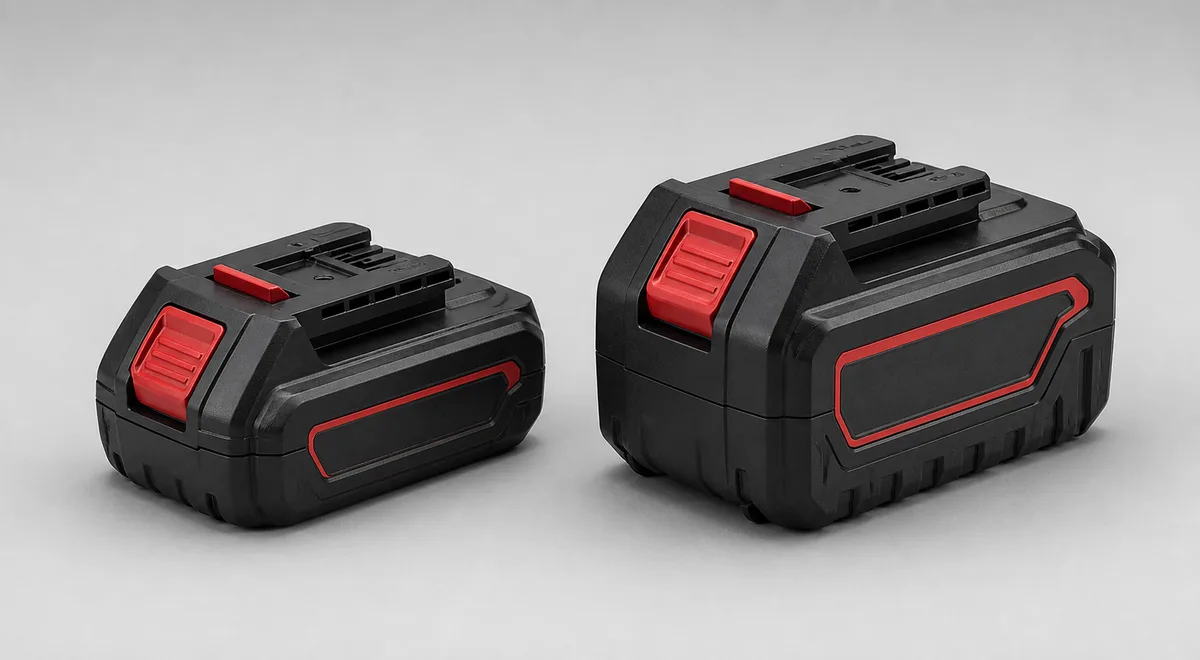 Two batteries from the same cordless tool platform
The lock-in cuts both ways, and I want to be plain about the downside because it is real. Once you are three tools deep in one brand, switching platforms means either running two chargers and two sets of incompatible batteries or throwing away a working investment. If your platform's batteries get discontinued or the brand shifts to a new pack design, which happens, you can find replacement packs getting scarce and expensive years down the line. You are, in a genuine sense, trapped in one brand's batteries, and that trap was set the day you bought the second tool.
So choose the platform with more care than the drill. The things to weigh are how broad the tool lineup is, so you can grow into it; how available and reasonably priced the spare batteries are, because those outlast the tools; and how long the brand has kept its battery form factor stable, because stability is what protects your investment over a decade. A drill from a mid-tier platform with wide tool availability and affordable spare packs is a better long-term buy than a slightly better drill on a platform that is narrow or prone to changing its batteries. You are choosing a battery ecosystem and getting a drill with it, not the other way around.
Brushless vs brushed, honestly
Brushless is the feature the industry is most eager to sell up right now, and it is genuinely better technology, so the honest question is not whether it is better but whether it is better for you. The short version: a brushless motor is worth it for frequent use, but a brushed drill is perfectly fine for occasional jobs.
The difference is in the motor. A brushed motor uses small carbon contacts that physically wear against a spinning part, so over years of heavy use they degrade and the motor eventually tires. A brushless motor drops that contact, which makes it run cooler, squeeze noticeably more runtime out of the same battery, and last longer under hard, repeated use. If you are driving screws most weekends or working the tool hard, that longer life and better battery efficiency pays back the premium.
Here is where the honesty comes in. If your real use is hanging a few pictures a year and assembling the occasional bookshelf, paying brushless money for that is wasted. A brushed drill will outlive your need for it doing light work, because you will never put enough hours on it to reach the point where the motor wear matters. The brushless advantage is measured in years of frequent duty, and light users simply never get there. I have a brushed drill well over a decade old that still drives everything a house asks of it, because it has never been worked hard. It has led a sheltered indoor life, and it has the longevity to show for it. Buy brushless if you will use it often; keep the money if you will not.
The cheaper path: corded, refurbished, or borrowed
Before you spend on any cordless drill, it is worth knowing that for a real slice of homeowners the smart buy is something cheaper, or nothing bought at all. A cordless drill is convenient, not mandatory, and the alternatives have honest advantages.
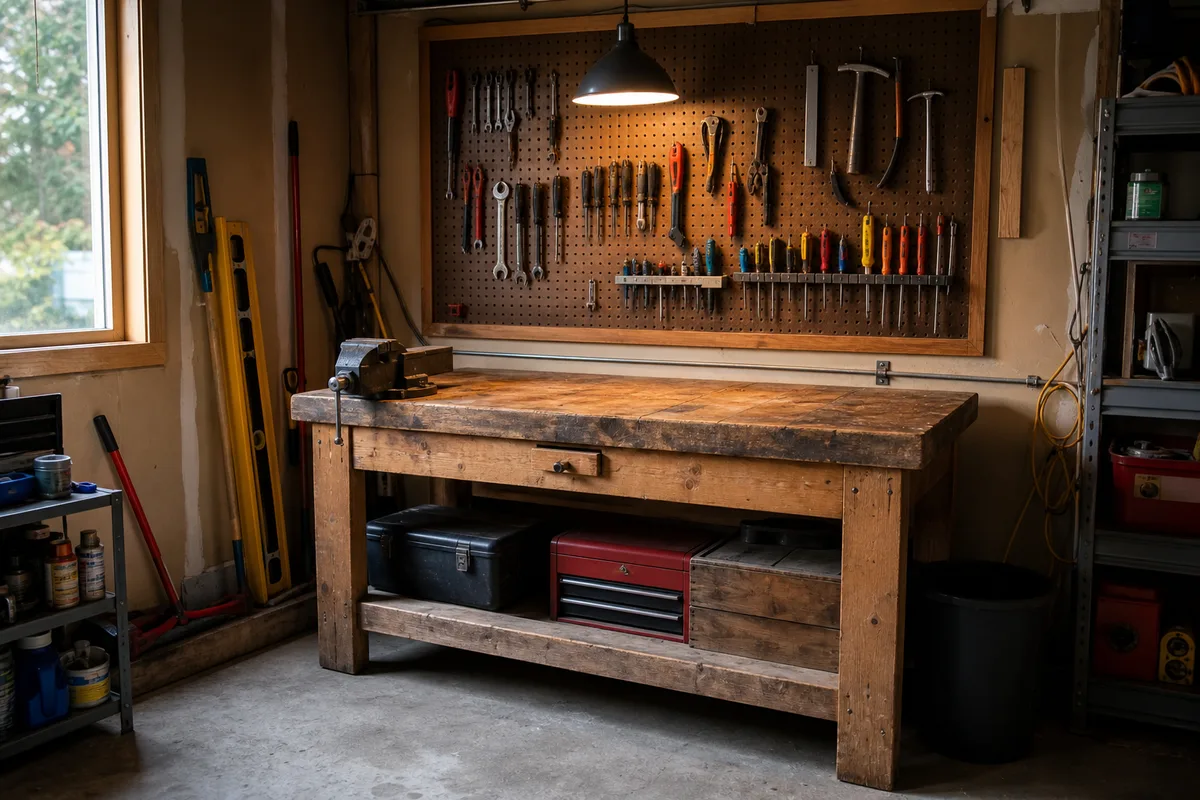
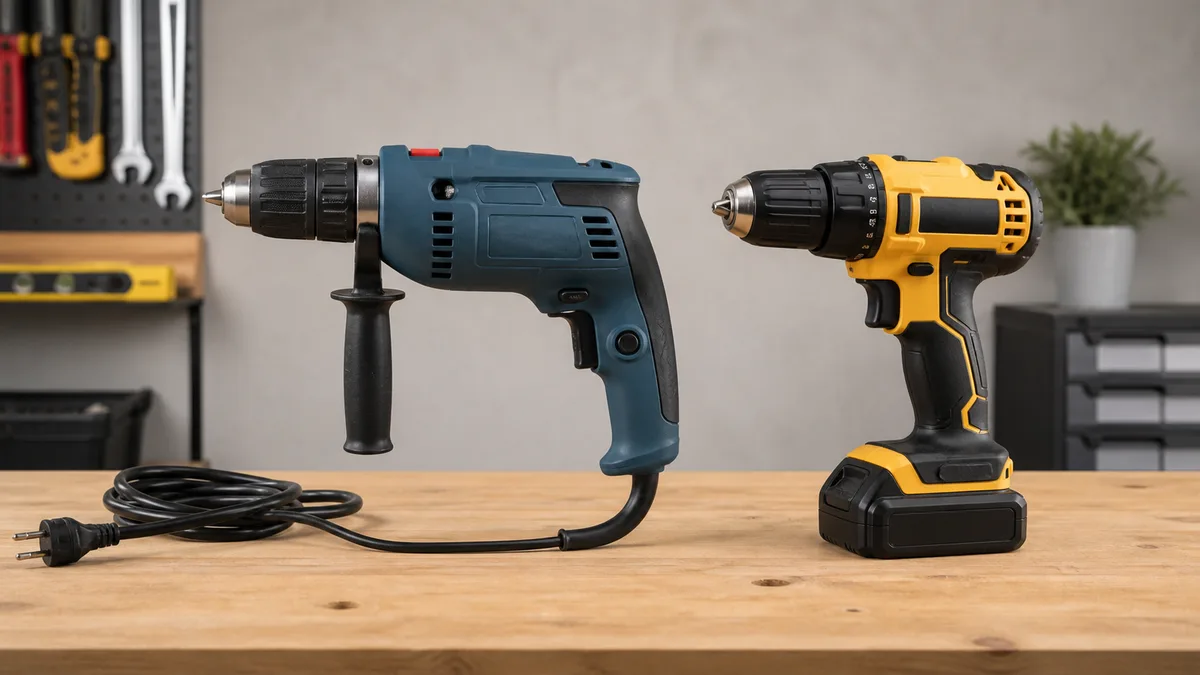 A corded drill next to a cordless drill on a workbench
A corded drill is the one people forget. It plugs into the wall, which means it has no batteries to die mid-job, no packs to replace in five years, and no charger to lose. It is lighter than a comparable cordless because it carries no battery weight, it costs less for the same power, and it never runs flat. The trade is obvious: you are tethered to an outlet or an extension cord, which is a real nuisance up a ladder or out in the yard. But for a workbench, a garage, or indoor jobs near a socket, a corded drill is a quietly sensible buy that sidesteps the entire battery-platform trap described above. If most of your drilling happens in one spot, seriously consider it.
A manufacturer-refurbished cordless is the middle path. These are units returned or lightly used, restored and re-tested by the maker, and sold with a warranty at a real discount. You get into a solid platform for less, and because a reputable refurbisher stands behind it, the risk is low. The catch is availability: you take what is in stock, so you may not get the exact model or color you pictured. For the money saved, that is usually a fine trade.
Borrowing is the right answer more often than pride lets people admit. Many communities have a tool library, and plenty of hardware stores and equipment yards rent tools by the day. If your project is a one-off, mounting a single heavy item, or a weekend of assembly you will not repeat, borrowing or renting a good drill for a day costs a fraction of buying one and leaves nothing to store or maintain. There is no shame in owning a tool only when you need it.
The kits deserve a warning here too. The bundles that pack a drill, an impact driver, a light, a radio, and a bag together look like value, and sometimes they are, but they often bundle tools you will not use to make the price feel justified. The radio is usually the one nobody asked for. Count how many of the pieces you would actually reach for. If the honest answer is one or two, the bare tool plus a second battery is usually the cleaner buy.
Who should buy what
Pulling it together into plain recommendations, because the right drill genuinely depends on which person you are.
The occasional homeowner, the once-a-month picture-hanger and furniture-assembler, is best served by a light, modest 18/20V brushed drill with two small batteries, or honestly by a corded drill if the work stays near an outlet. Do not pay for brushless or for a big pro-tier platform you will never fill out. Spend the least that gets you a decent chuck and a usable clutch, and put the rest of the money elsewhere. For a one-off project, borrow before you buy.
The regular weekend tinkerer, working most weekends and planning to accumulate tools over time, should buy into a mid-tier 18/20V platform with a brushless drill and two batteries, chosen mostly for how broad and stable that battery ecosystem is. This is the person for whom the platform decision pays off, because the impact driver and the saw are coming next, and they should all share packs. This is also where a thoughtfully assembled kit makes sense, which the guide to building a starter tool kit walks through piece by piece so you spend where it counts.
The homeowner facing one big project, a deck, a shed, a room of built-ins, should rent or borrow the heavier tool for the duration rather than buying capability they will not need again, and keep a modest drill for the ordinary jobs afterward.
The thread through all of it: match the tool to your real use, respect the platform decision more than the spec sheet, and remember that the cheapest path, corded, refurbished, or borrowed, is often the honest best answer rather than a compromise. A drill is there to make the actual work in your house easier. Buy exactly enough of one to do that, and no more.