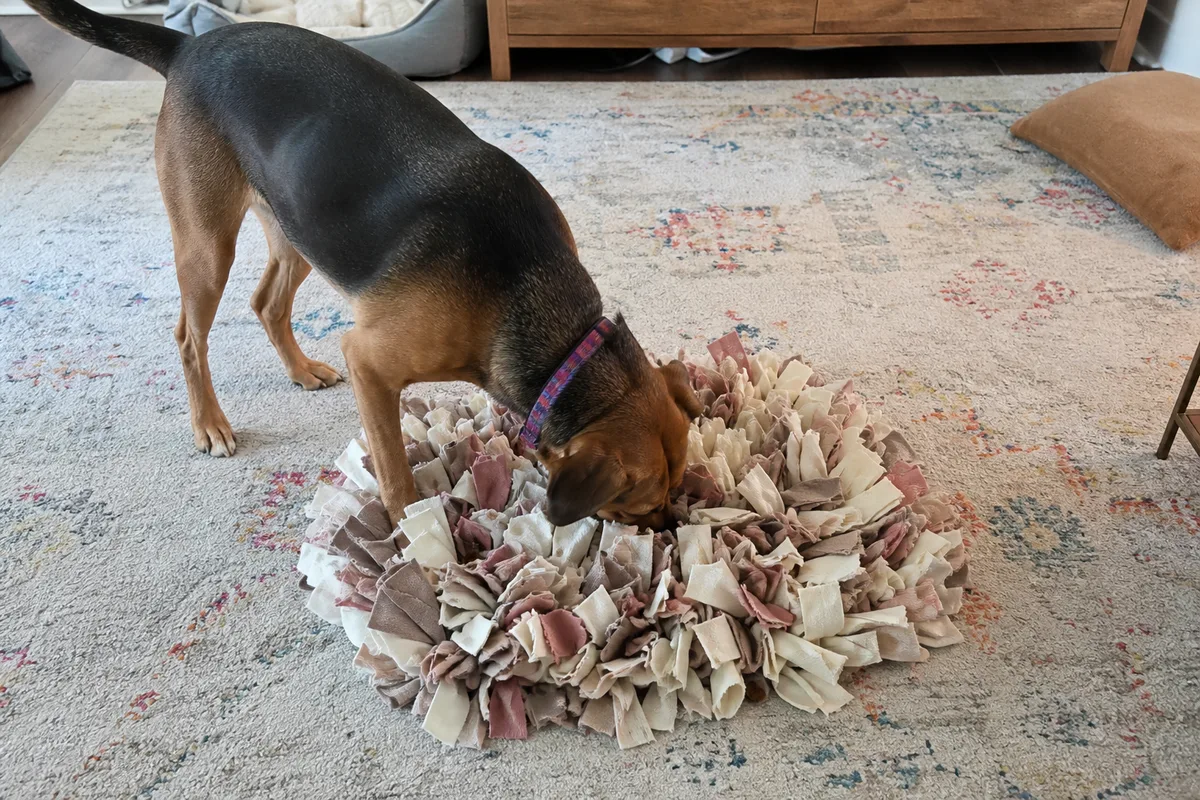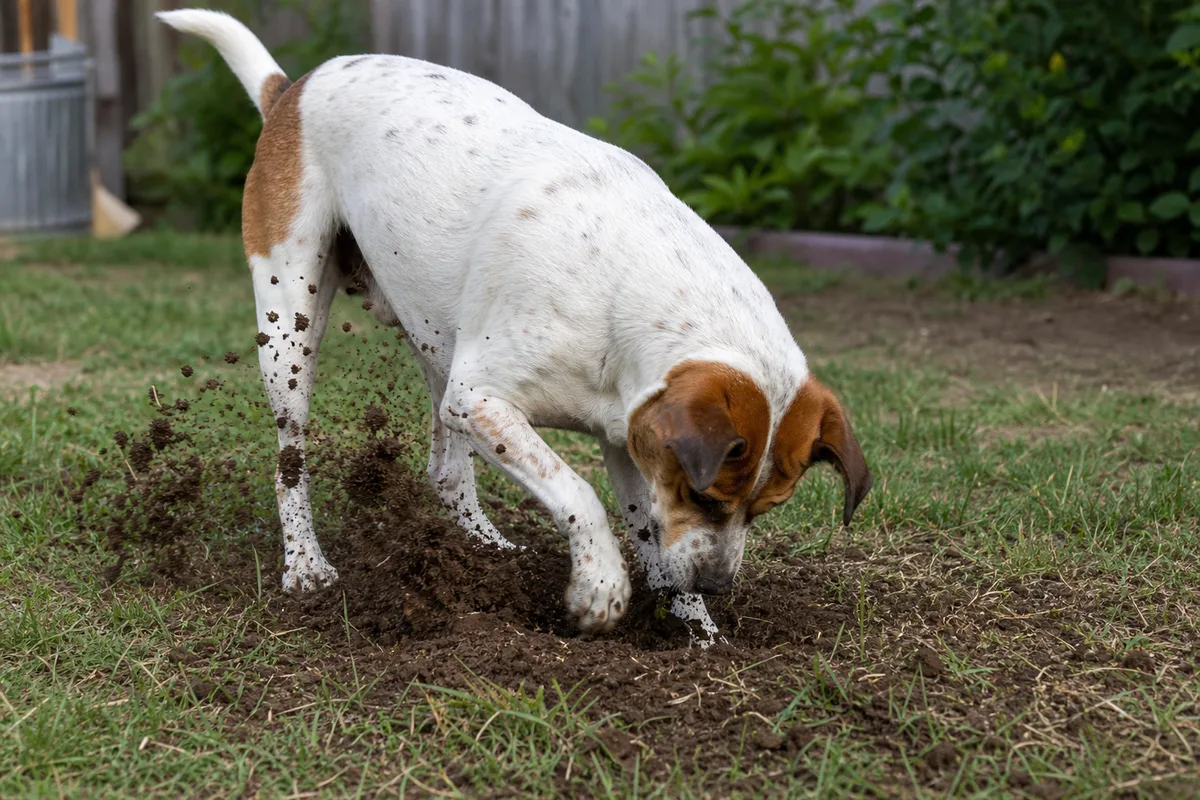
I have filled in more holes than I can count, and for the first few years I did it wrong. I would walk the yard in the evening, find three fresh craters, tamp dirt back in, press a flat rock or a piece of chicken wire over the spot, and feel like I had solved something. By the weekend there were four new holes a few feet over, as if the dog had reviewed my work and requested revisions. What finally changed the yard was not a better filling technique. It was giving up on the idea that digging is one problem with one answer.
Digging is a behavior with several completely separate motives behind it, and the same hole can mean very different things depending on the dog in front of it. A hole dug in the shade at two in the afternoon is not the same event as a hole scraped under the fence at the far corner of the lot, even though both are just dirt moved out of the ground. If you treat them the same, you will fix neither. The whole job here is diagnosis first, intervention second. Read what the dog is telling you, name the reason, then apply the fix that matches that reason. Everything below is organized around that order.
The cratered lawn and why filling holes fails
Filling holes feels like progress because it is visible and immediate. You can stand back and see restored ground. But filling a hole treats the symptom and leaves the entire cause untouched, and to the dog the refilled patch is often more interesting than it was before, because now the soil is loose and easy to move again. I have watched a dog re-excavate the exact spot I filled twenty minutes earlier, and from the dog's point of view that is a reasonable thing to do. Loose dirt is easier than packed dirt, and you had just thoughtfully pre-loosened it for him.
The old tricks people reach for tend to fail for the same reason. Burying chicken wire an inch down does sometimes stop a dog at that one spot, but a determined digger simply relocates a foot to the side, and now you have wire to trip over and a hole anyway. Burying the dog's own waste in the hole, or filling it with water, or scattering pepper, are all attempts to make one specific patch unpleasant. None of them address why the dog wanted to dig in the first place, so the drive just finds new ground. Punishment after the fact fails even harder. A dog that gets scolded when you find the hole does not connect the scolding to the digging it did an hour ago while you were at work. It connects the scolding to you arriving in the yard, which teaches it to avoid you, not to stop digging.
There is one honest limit worth stating up front. If your dog belongs to a type bred specifically to go into the ground after quarry, you are working against many generations of selection for exactly this behavior. You can manage it, redirect it, and reduce it a great deal, but expecting zero digging from a dog whose entire heritage is dirt is setting yourself up to feel like a failure. The realistic goal for most yards is to move the digging to a place you have chosen and shrink it everywhere else, and that is very achievable.
Reading the location and timing of the holes
Before you change anything, spend three or four days as an observer instead of a groundskeeper. Do not fill the holes right away. Note where each one is, how deep it goes, what the dog seemed to be after, and roughly when it happened. The pattern that emerges is the closest thing to a confession you will get.
Location is the single most useful clue. Holes along the fence line usually mean one of two things: the dog is trying to get out, or something on the other side, a rabbit warren, a burrowing rodent, a neighbor's chickens, is pulling it in. Holes clustered in a cool, shady spot on a hot day are almost always comfort-seeking, a dog carving out cool earth to lie against. Holes right next to the foundation or under a deck often mean the dog has found or smelled an animal denning there. Scattered, shallow, random holes all over the open lawn, with no clear focus, point toward boredom more than any specific target.
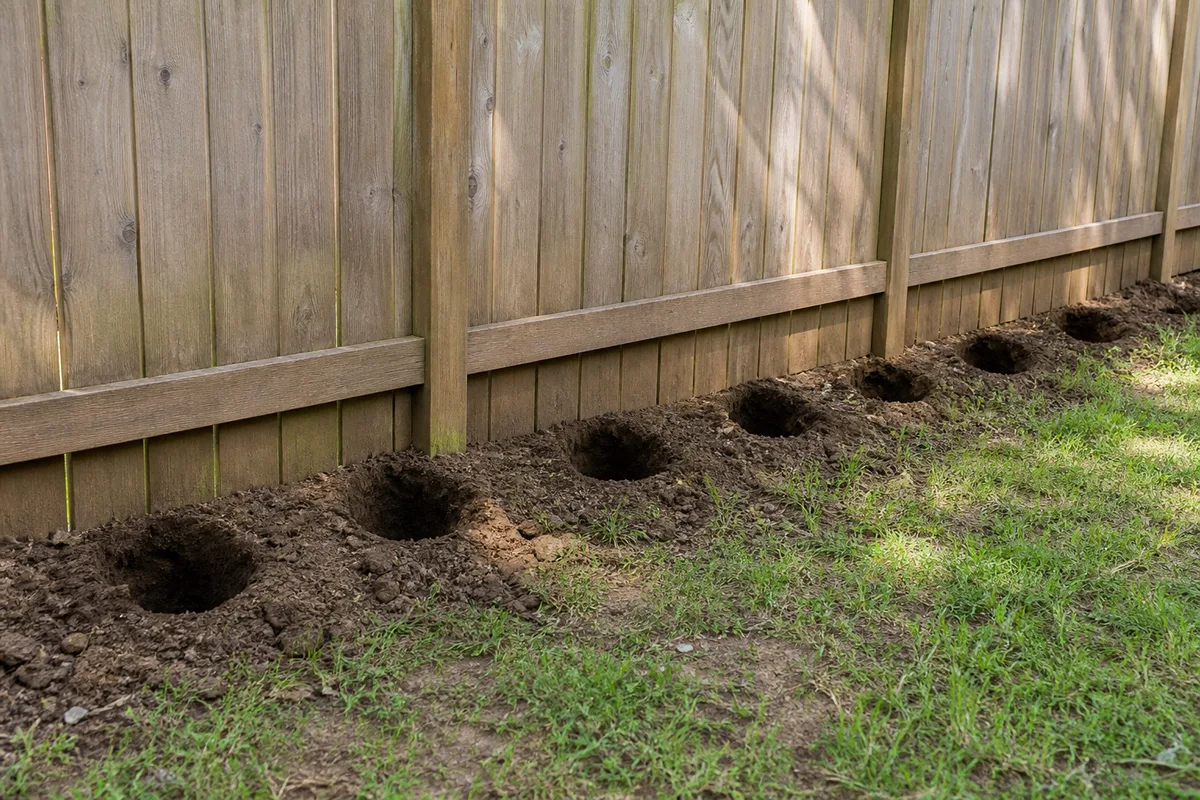 Dog-dug holes along a backyard fence line
Timing tells you the other half. Digging that happens mostly when the dog is alone, in the stretch after you leave and before you come home, reads very differently from digging that happens while you are standing right there. Alone-digging is usually about spending energy or coping with an empty afternoon. Digging done in your presence, especially at a specific spot the dog keeps returning to and sniffing intently, is more often a hunt. Depth is a smaller clue but a real one: a shallow scrape a few inches deep, often followed by the dog flopping down into it, is a comfort dig, while a narrow hole that goes down eight or ten inches and keeps going is a dog chasing a scent that leads underground.
Write down what you find, even loosely. Once you can say "fence line, when alone, afternoons" or "shady bed under the maple, hot days, shallow," you already know which of the next four sections applies, and you can skip straight to it.
Reason 1: boredom and under-exercise
This is the most common cause I run into and the one owners are most reluctant to accept, because the fix asks something of them rather than of the dog. A dog that is under-exercised and left alone in a yard for hours will dig for the same reason a bored person taps a pen or paces a room. Digging is absorbing, physical, and self-rewarding. The dirt moves, the smells change, time passes. For a dog with unspent energy and nothing to do, it is one of the most satisfying activities available in an empty yard.
The tell is in the pattern you already read: scattered holes, mostly made when the dog is alone, worst on days when it got little activity beforehand. A dog that ran hard in the morning and came home tired rarely spends the afternoon excavating. The same dog after a rushed five-minute walk, or no walk at all, often does. This is where owners reach for punishment when the real remedy is often as small as twenty more minutes of real activity in the morning, before you leave the house. Not twenty minutes of wandering the block while the dog sniffs one mailbox, but twenty minutes that actually move the dog, a brisk walk with pace changes, a game of fetch that makes it run and turn, some nose work that makes it think. A dog whose needs are met before you leave has far less fuel to burn on the lawn.
Physical exercise is only half of it. Mental work tires a dog in a way that walking alone does not, and it travels well into the hours you are gone. Feeding a portion of the daily meal out of a puzzle feeder or scattered across the yard for the dog to hunt turns an empty afternoon into a job. A frozen stuffed chew given as you leave gives the dog thirty focused minutes right at the moment digging tends to start. Rotating a small set of chews so the dog is not bored of all of them at once keeps the novelty up. None of this is exotic. It is just making sure the dog has something to do with its body and its nose besides the ground.
The honest limit here: enrichment reduces boredom-digging, it does not erase a dog's need for company and activity. If a dog is spending eight or nine hours alone in a yard every day, no puzzle feeder fully closes that gap, and the digging is partly a message about the amount of alone time itself. This kind of everyday attention to a dog's routine sits inside the wider picture of keeping a pet well cared for day to day, where exercise, company, and mental work are the baseline the yard behavior is built on.
Reason 2: hunting something underground
Some digging is not boredom at all. It is a dog doing exactly what a dog is built to do: following a scent to its source, and the source happens to be under the grass. Moles, voles, gophers, ground-nesting insects, and rodents tunneling along the edges of the yard all leave scent trails and vibrations a dog can detect far better than you can. When you see a hole that is narrow, focused, and deep, dug at a spot the dog keeps coming back to and pushing its nose into, you are usually watching a hunt, not a hobby.
The distinguishing features are worth knowing. Hunting holes tend to be singular and intense rather than scattered and casual. The dog works with real focus, sometimes for many minutes, ignoring you and the rest of the yard. The holes often line up along a path, tracing a tunnel the dog is following underground, and they frequently show up near the foundation, under a shed, or along a garden bed where burrowing animals like to travel. If you find a hole and then find a small tunnel entrance or disturbed soil a few feet away, that confirms it.
The fix for hunting-driven digging is different from every other reason on this list, because the motive is the animal, not the dirt. No amount of exercise or enrichment stops a dog from responding to a rodent living under its yard, any more than a full stomach stops it from noticing a squirrel. You have to address the prey. That means dealing humanely with the underlying pest problem, reducing what draws them, spilled birdseed, an unsecured compost pile, thick cover along the fence, and making the yard a less appealing place for small animals to tunnel through. Once the underground residents are gone, the scent trail fades and the reason to dig at those spots goes with it. This is the one case where fixing the yard, not the dog, is the whole job. Trying to train a terrier out of responding to a live rodent under its feet is a losing battle worth skipping.
Reason 3: heat and comfort-seeking
On a hot afternoon, a dog with a thick coat and no cool place to lie will make one. A few inches under the surface, in the shade, the soil is noticeably cooler than the air, and a shallow scrape exposes that cool earth for the dog to press its belly and chest against. This is one of the easiest reasons to identify and one of the most reasonable from the dog's side. It is not misbehavior. It is a dog solving a comfort problem with the only tool it has.
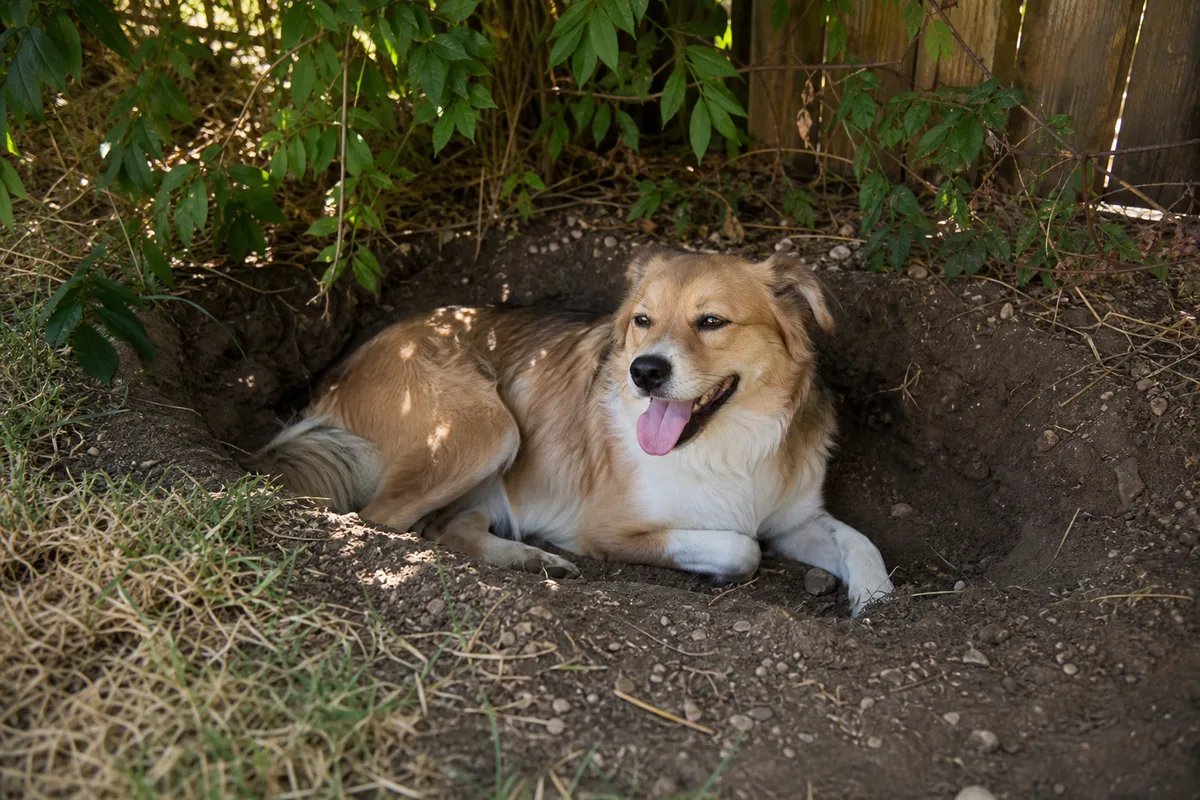 A dog resting in a shallow dug-out cool spot in the shade
The signs are consistent. Comfort holes are shallow, wider than they are deep, and located in the shadiest spots the yard offers, under a tree, against the cool north side of the house, beneath a deck. They appear on warm days and not on cool ones, and the clinching detail is that you often find the dog lying in the hole rather than actively excavating it. A dog that digs a bed and then settles into it with a sigh has told you exactly what it wanted.
Because the motive is temperature, the fix is to give the dog a cooler option than bare earth. Reliable shade that stays shade as the sun moves is the first thing to check; a spot that is shaded at nine in the morning may be full sun by two in the afternoon, which is exactly when the digging starts. A raised cot-style bed that lets air move underneath stays cooler than a mat on the ground. Access to fresh water in the shade, and, for many dogs, a shallow basin of water to stand in or a spot kept damp, gives the same cooling the dug bed provides without the crater. The most important judgment call is simply making sure a dog that spends hot afternoons outside has a genuinely cool place to be. If comfort-digging is the pattern, the more serious question is whether the dog should be outside in that heat for that long at all, and often the honest answer is to bring it in during the worst hours rather than to fight the instinct to find cool ground.
Reason 4: escape along the fence
Digging under the fence is its own category because the goal is not the digging, it is the other side. A dog trying to escape works the boundary, usually at a corner, a gate, or a low spot, and the holes follow the fence line rather than sitting out in the open. This is worth taking seriously beyond the damage to the lawn, because a dog that gets under a fence is a dog loose in the neighborhood, and that is a genuine safety problem for the dog.
The motive behind escape-digging varies, and it is worth naming because it changes the fix. Some dogs are trying to get to something specific: a dog in heat nearby, another dog they can hear, the same rabbit that pulled them to the fence in the first place. Some are trying to get away from something in the yard, a noise, a lack of shelter, isolation. And some are simply under-stimulated and treating the fence as the most interesting puzzle available, which loops right back to the boredom section. A dog that escapes and then roams and explores is often a bored dog whose real problem is back in section one.
Physically blocking the dig is more justified here than anywhere else, because the stakes are higher. Sinking an L-shaped barrier of wire or hardware cloth so that it runs down the fence line and then bends outward under the surface stops a dog from tunneling at the base, because when it digs down it hits the horizontal apron. Anchoring the bottom of the fence, laying flat rock or pavers along the base, or setting large stones in the trouble corners all remove the easy dig point. But do this alongside addressing the motive, not instead of it. A dog that desperately wants out will test the whole perimeter, and if it is escaping out of boredom or loneliness, the barrier just moves the effort down the line. Fix why the dog wants to leave, then make leaving physically hard, in that order.
Redirecting with a designated dig spot
For a dog with a strong, genuine drive to dig, the terriers and the earth-dogs especially, the most reliable long-term answer is not to stop the digging but to move it. Fighting a hardwired behavior head-on tends to produce a frustrated dog and a stubborn owner. Giving the drive a legal outlet works with the dog instead of against it, and in my experience it is the single change that holds up over years rather than weeks.
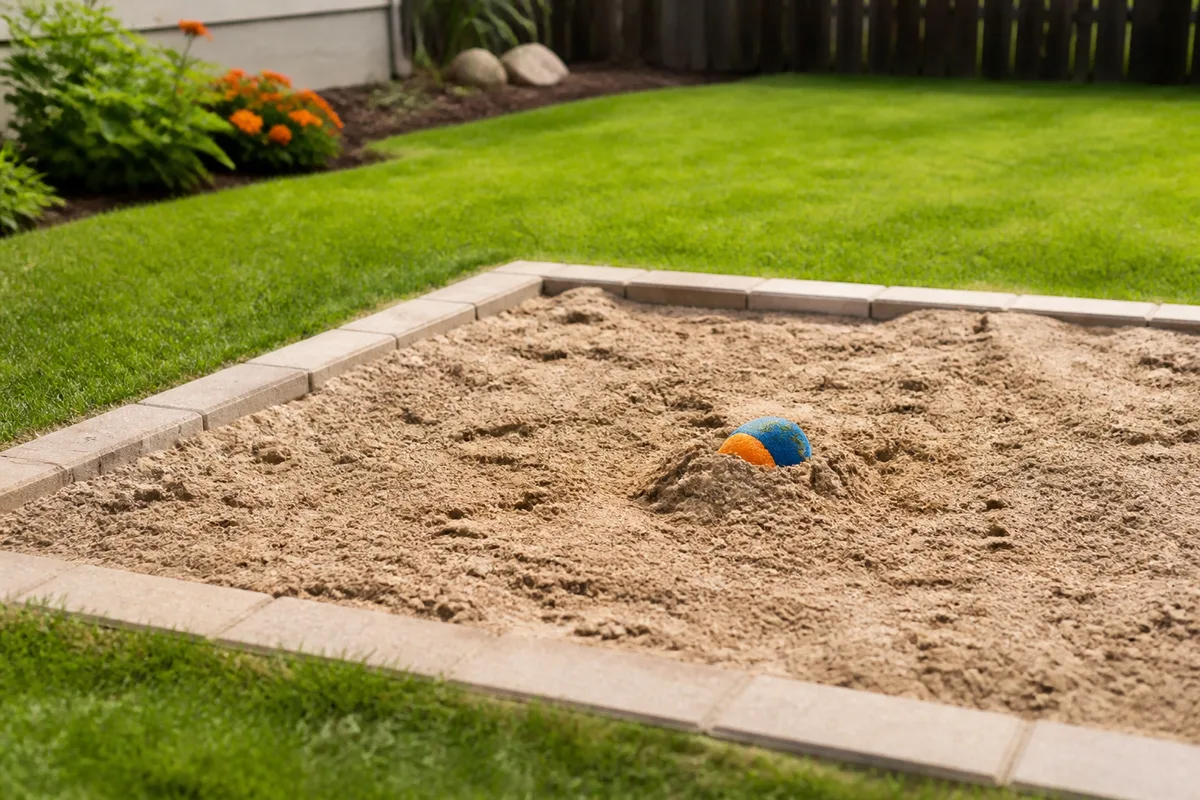 A designated digging spot in a yard with a half-buried toy
A designated dig spot is a defined area, a loosened patch of soft ground, a corner of the yard, or a simple frame filled with sand and loose dirt, that the dog is allowed and encouraged to dig in. The setup matters. The soil should be genuinely loose and easy to move, softer than the surrounding lawn, so the dig spot is the path of least resistance. Bury a few of the dog's toys and a couple of chews a hand's depth down, and let the dog discover them. The buried find is what makes the spot stick: the dog learns that digging here pays off with something good, while digging in the packed lawn turns up nothing. A patch seeded with a buried toy redirects the drive rather than fighting it, and because it rewards the exact behavior the dog wants to do, it actually holds instead of fading like a deterrent does.
Teaching the dog to use it takes a week or two of showing up. Bring the dog to the spot, get a little excited about it, help it uncover a buried toy the first few times so it understands the rules of the game, and praise the digging there rather than scolding it. When the dog starts to dig somewhere it should not, interrupt calmly and walk it over to the legal spot, then reward digging in the right place. Refresh the buried treasures every few days so the spot keeps paying out. This is ordinary reward-based teaching, and the timing of when you praise matters as much as the praise itself, which is the same principle at work in how dogs learn to repeat what gets rewarded. The dog is not learning "do not dig." It is learning "dig here, because here is where the good stuff is."
The limit worth being honest about: a dig spot solves a drive-to-dig problem. It does not solve a rodent under the far fence, an escape attempt, or a dog roasting in the sun with no shade. If you build a beautiful sandbox and the digging continues elsewhere, that is not a failed dig spot. It is a sign the real reason is one of the others, and you are back to diagnosis.
Matching the fix to the reason
Everything in this guide comes down to reading the yard correctly and then applying the matching intervention, so it is worth pulling the whole thing back together as a decision process you can walk through in your own yard.
Start with observation, not repair. Leave the holes for a few days and record where they are, when they happen, how deep they go, and whether the dog is alone or with you. That record is your diagnosis.
Then match. Scattered, shallow holes made mostly when the dog is alone, worse after low-activity days, point to boredom, and the fix lives in more real exercise before you leave and mental work while you are gone, not in the yard itself. Narrow, deep, focused holes at a spot the dog keeps returning to and sniffing point to hunting, and the fix is dealing with the animal underground and what draws it, not the dog. Shallow, wide scrapes in the shade on hot days, often with the dog lying in them, point to comfort-seeking, and the fix is a genuinely cooler place to rest and a hard look at whether the dog should be out in that heat at all. Holes tracking the fence line point to escape, and the fix is addressing why the dog wants out and then physically securing the base of the fence. And a dog with a strong general drive to dig, regardless of the specific trigger, benefits from a designated dig spot that gives the behavior a legal, rewarding home.
A few dogs will show more than one reason at once, a bored dog that also escapes, or a hunter that also digs a cool bed in summer, and for those you work the reasons in parallel rather than expecting a single fix to cover all of it. What does not vary is the sequence: watch, diagnose, then intervene where the actual cause is. Filling holes will always be part of yard life with a dog, but once the fix is aimed at the reason instead of the crater, you go from filling four holes a day to filling one a month, and eventually to a lawn that mostly stays where you put it.