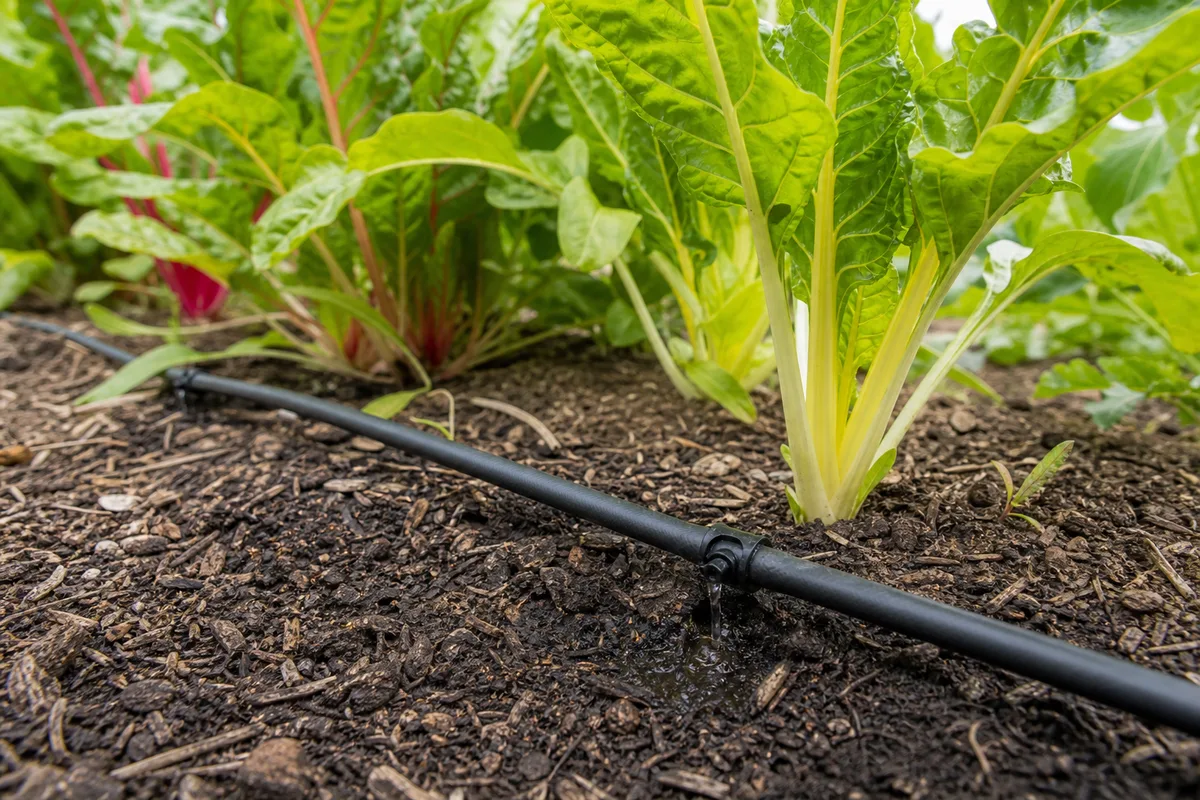
The question I get asked most in July is some version of this: I am tired of standing out here with a hose every night, should I put in drip? It is a fair question, and the honest answer is that it depends on how much garden you have and how much of your evening you are willing to keep spending on it. Drip irrigation is not automatically better than hand watering. It solves a specific problem, it introduces a few new ones, and there is a real crossover point where it stops being a gadget and starts being the thing that keeps your garden alive when you are busy.
I have watered gardens both ways for years, and I have installed drip on beds where it paid for itself in a single summer and on beds where it was, in hindsight, a fine way to lose a Saturday. What follows is the comparison I wish someone had laid out for me before I bought my first kit: what each method actually does well, where each one falls apart, what the setup really costs in time and money, and the garden sizes where the choice makes itself.
The choice every growing garden faces
Almost nobody starts a garden with drip irrigation. You start with a hose, or a watering can, because you have one bed and it takes four minutes. That works. The trouble is that gardens grow. One bed becomes three, three become six, and the tomatoes you added last year want a deep soak every couple of days in the heat. Somewhere in that growth the watering stops being a pleasant few minutes and becomes a chore you resent.
That is the real fork in the road, and it is worth naming plainly: this is a decision about your time and your consistency, not about which method grows better plants. A plant does not know whether the water arrived through a plastic emitter or the end of a wand. It knows whether it got enough water, at the right depth, often enough. Both methods can deliver that. Both methods can fail at it, usually with your enthusiastic help. What separates them is how much of the work lands on you, and how forgiving each one is when life gets in the way for a week.
I want to be clear about my bias before I go further, because I would rather you catch me at it than trust me blindly. I like hand watering more than most people expect a drip advocate to. It keeps me in the garden looking at things. But I also know that a garden past a certain size will not get watered reliably by hand, because reliability depends on a person showing up every single evening, and people do not. Understanding the trade-off honestly is more useful than me selling you on either side.
What hand watering does well
The strongest thing hand watering has going for it is that you are standing there. Every evening, for however many minutes it takes, you are looking at each plant from a foot away. That is when you catch the things that matter: the first hornworm chewing a tomato leaf, the squash that wilted at three in the afternoon and never recovered, the seedling a bird pulled up, the soil in one corner that has gone dry and crusty while the rest is fine. Drip does not give you that. Drip runs whether or not anyone is watching, which is its great strength and its quiet weakness.
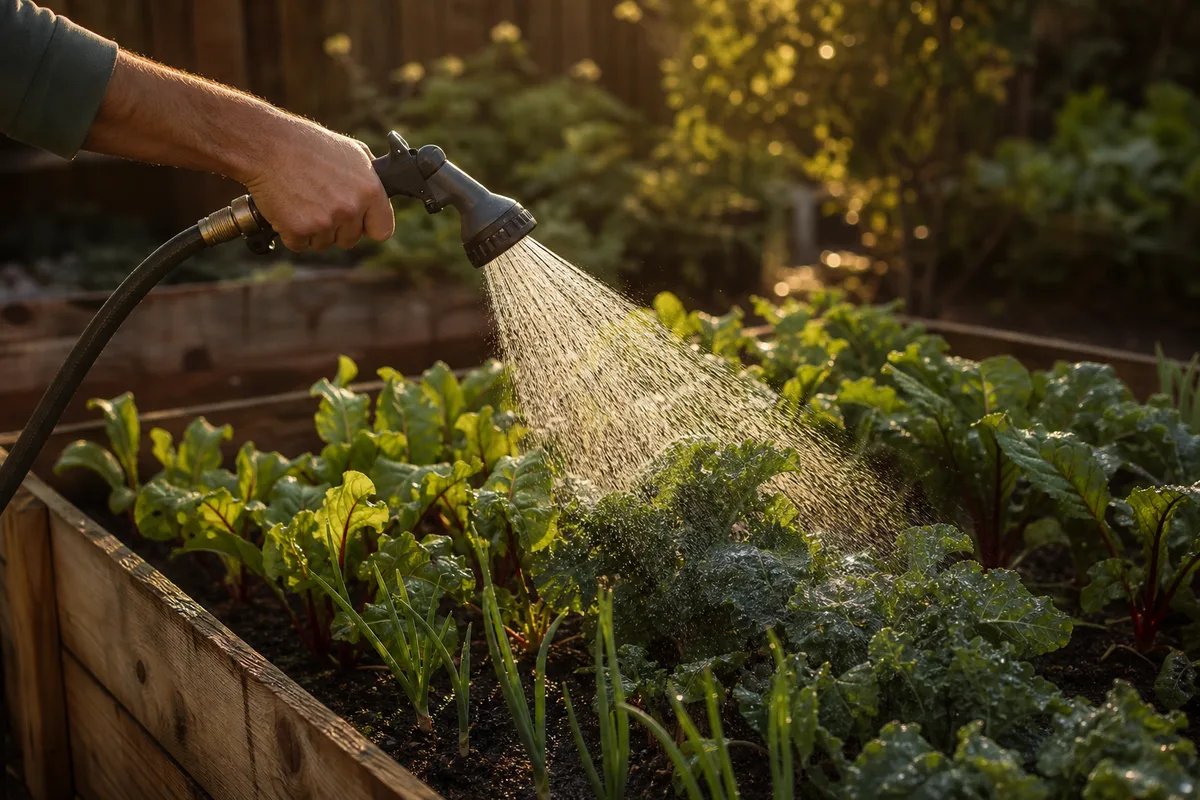 A gardener hand watering a raised bed with a hose wand
Hand watering also gives you total control over how much each plant gets, and that control is real, not theoretical. A newly transplanted pepper wants a gentle daily drink for its first week while its roots take hold. An established tomato right next to it wants a heavy soak twice a week and nothing in between, so the surface dries and the roots chase the water down. With a wand you simply give each one what it asks for. You can skip the bed that got rain yesterday and double up on the container that dries out by noon. A basic drip layout treats a whole zone the same unless you go to the trouble of tuning individual emitters, which most people never do.
There is a control point people forget, too: hand watering lets you keep water off the leaves. A lot of common plant trouble in a humid week starts with foliage that stays wet overnight. With a wand held low at the base, you water the soil and leave the leaves dry. It is a small habit that prevents a real headache, and it is entirely in your hands.
The setup cost of hand watering is close to nothing. You need a hose that reaches, and a wand with a shutoff so you are not walking back to the spigot every time. If you want to think through the hose itself, I wrote a separate piece on choosing a garden hose that covers length, diameter, and the fittings that actually last. Beyond that, there is nothing to install, nothing to winterize, and nothing to clog. For a small garden that simplicity is worth a great deal.
Where hand watering falls apart
Hand watering has one failure mode, and it is not subtle: it depends on you showing up every day, and the day it matters most is, with almost comic reliability, the day you are least likely to be there. The July evening when it hit ninety-five and everything is drooping is exactly the evening you got home late, or went away for the weekend, or simply could not face the hose. Miss two of those in a row during a heat wave and you can lose shallow-rooted crops that would have sailed through on a timer.
The other quiet failure is depth. Hand watering rewards impatience, and impatience waters shallow. It feels like you have soaked a bed when the surface goes dark and glistens, but that top inch wetting up takes only a few seconds and tells you nothing about what is happening six inches down where the roots are. To actually wet the root zone of an established bed you often need to stand there far longer than feels reasonable, or pass over it two or three times letting it soak in between. Most people do not, so their plants get trained to root shallow, which makes them even more dependent on the next watering. It becomes a cycle.
Then there is the plain arithmetic of scale. One raised bed is a four-minute job and a genuine pleasure. Here is the pattern I have watched play out over and over: hand watering makes sense up to a handful of beds, and past that the daily twenty-minute chore in July is what pushes people to drip, not the water savings. Nobody installs irrigation to shave a few gallons off the water bill. They install it because standing outside for twenty-five minutes every single evening in the heat stopped being something they were willing to do. That is the real breaking point, and it is about time and willpower, not plumbing.
This is also worth admitting: hand watering will not work if you travel. If your summer includes trips of more than two or three days, no amount of technique fixes the fact that nobody is home to hold the hose. That is not a knock on the method. It is just its hard limit.
What drip irrigation does well
Drip's first and biggest advantage is that it delivers water slowly, right at the base of the plant, straight to the root zone. Because the water goes on the soil and soaks in over a long, gentle run rather than blasting the surface, far less of it evaporates off before the plant can use it, and almost none lands on the foliage. On the hot, windy afternoons when a sprinkler loses a chunk of its output to evaporation and drift before it ever hits the ground, drip keeps nearly all of it in the dirt where it belongs.
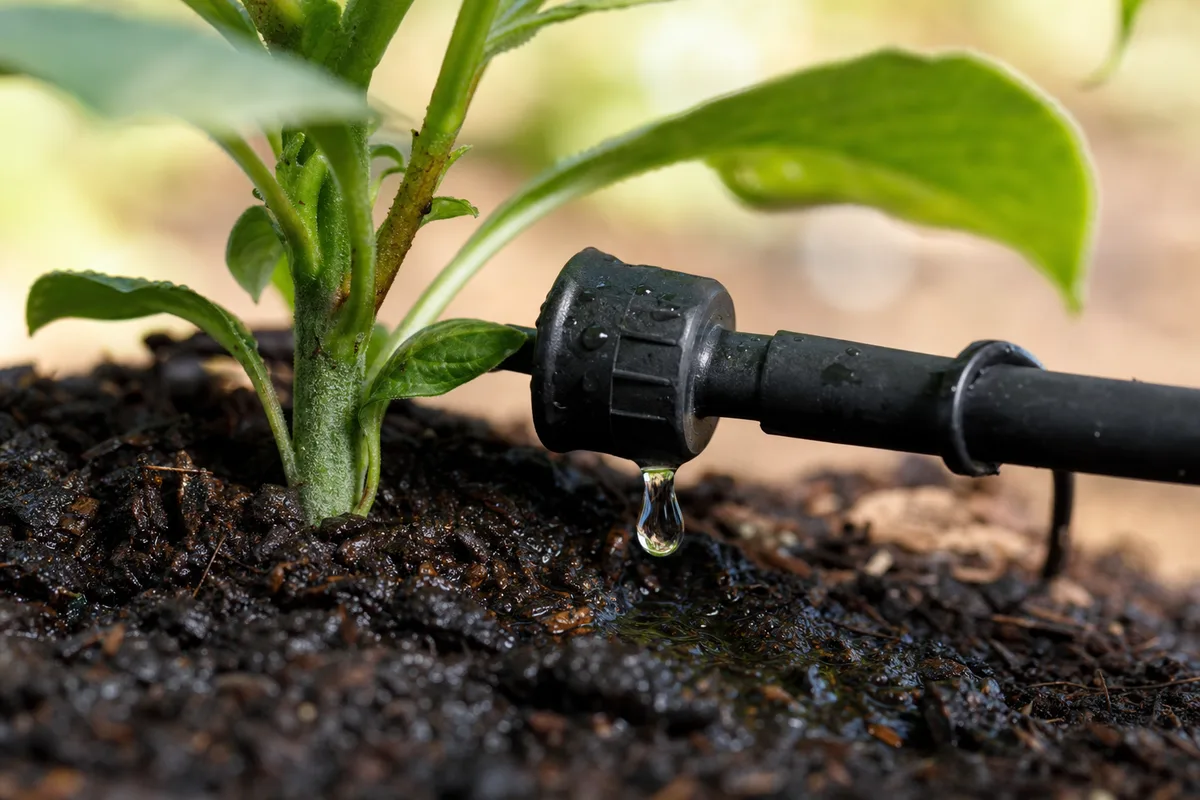 A drip emitter releasing water at a plant's base
The second advantage is depth, and it is the one that quietly improves plants the most. Because emitters trickle rather than pour, water has time to move down instead of running off the surface. A drip line left on for forty-five minutes to an hour puts water eight to twelve inches deep in most beds, which is exactly where you want tomato and pepper roots to be. Deep roots mean drought-tolerant plants, and plants watered by a slow drip tend to root deeper than the same plants watered by an impatient hand. If you want to understand why that depth matters so much, it comes down to how the soil itself holds onto water between waterings, which I get into in how soil holds water and nutrients.
The third advantage is the obvious one, but it is real: consistency without you. Put a drip system on a timer and the garden gets watered at five in the morning, before the heat, at the same depth, every day, whether you are home or not. That is the whole reason to do it. It turns watering from a daily act of discipline into a system that runs itself, and it removes the single biggest cause of dead midsummer plants, which is a person who meant to water and did not. For a gardener who travels, or who simply cannot promise to be home every evening for four months, that reliability is the entire value proposition.
Drip also scales in a way hand watering cannot. Watering ten beds by hand is a job. Watering ten beds on drip is the same as watering one, because you are not doing it. The labor does not grow with the garden, and that changes what size of garden is realistically maintainable for a person with a full life.
The hidden costs of drip
Now the honest part, the section the kit box leaves off. The biggest one is this: drip hides problems, and it hides them precisely because it works without you watching. A clogged emitter can starve one plant for a week before you notice, and by the time you notice it is usually because that plant is wilting while its neighbors look fine. A hard-water deposit or a bit of grit lodges in a single emitter, that plant gets nothing, and because you stopped doing the evening walk that hand watering forced on you, nobody was there to catch it early. The system that frees you from the garden also removes you from it, and something is lost in that trade.
Emitters clog. That is not a defect, it is the nature of forcing water through a pinhole. Mineral scale builds up over a season, and fine sediment in the water finds the narrowest opening every time. A well-run drip system needs flushing, which means opening the far ends of the lines and letting the water run hard for a minute to blow out the grit, a couple of times a season. Skip it and the clogs multiply.
Then there is winter. A drip kit needs seasonal flushing and winter draining that you will otherwise forget, and forgetting has a cost. Water left in the lines through a hard freeze can split the tubing and crack the fittings, and you find out in spring when you turn it on and it sprays cheerfully from six places it should not. Draining is not hard, but it is one more seasonal chore that hand watering simply does not have, because a hose you coil in the shed does not care about frost the way a fixed network of thin tubing does.
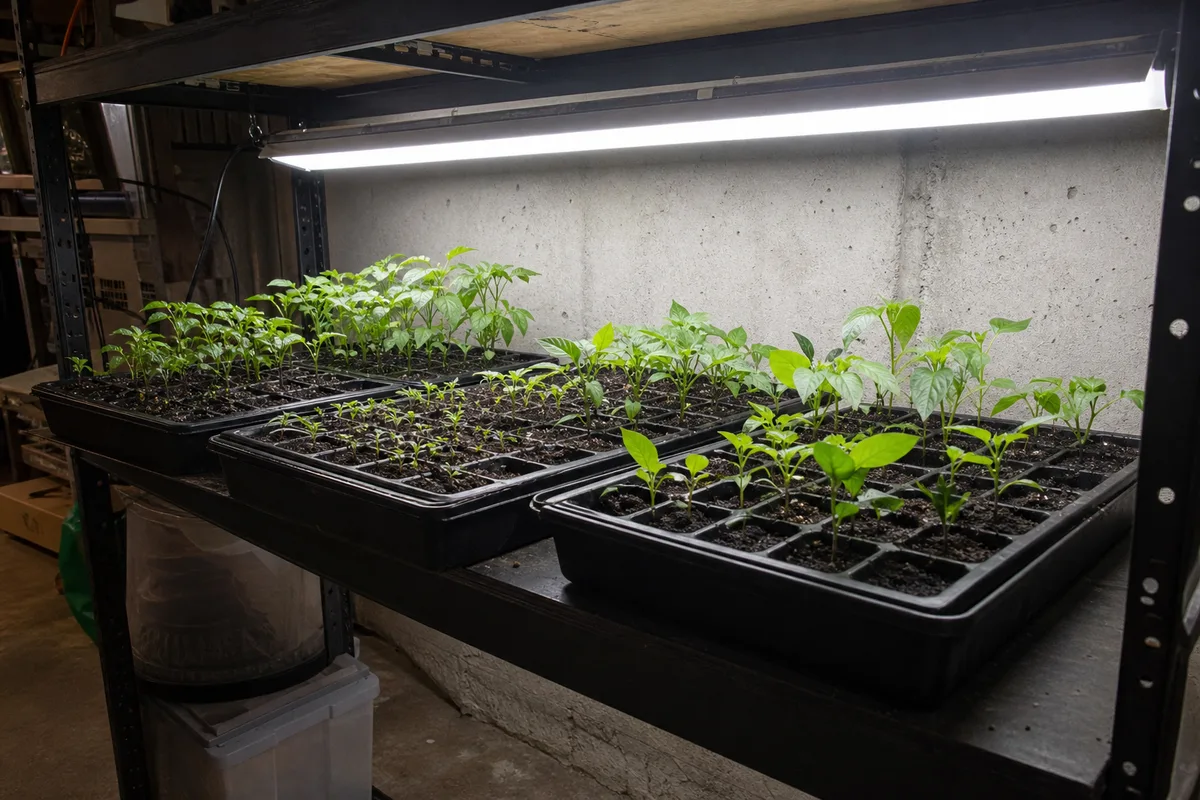
Drip is also less flexible once it is down. Move a plant, add a bed, change your layout, and you are cutting into lines and adding fittings, not just pointing a wand somewhere new. And drip is genuinely bad at a few specific jobs: it does not water a freshly sown row of seeds well, because seeds need the whole top inch damp across a band, not a series of wet dots six inches apart. For starting seeds you will usually still be reaching for a can or a gentle wand regardless of what irrigation the bed has. It is worth knowing that going in so you are not surprised when the emitters do a poor job of it.
Cost and setup time compared
Let me put real numbers on it, with the honest caveat that prices vary by region and by how elaborate you get. Hand watering costs whatever a decent hose and a wand cost, and that is the end of it. Call it a modest one-time purchase and nothing after.
A basic drip kit for a few beds is a different but not frightening number. The parts are cheap in isolation: a roll of half-inch mainline tubing, a spool of quarter-inch feeder line, a bag of emitters, a pressure regulator, a filter, a backflow preventer, and a handful of connectors and stakes. A starter kit that covers three or four beds runs a modest afternoon and lands under a typical hose-and-timer budget, which surprises people who assume irrigation means a contractor and a trench. It does not. This is a job you do yourself on a Saturday.
The setup time is where people underestimate. A first drip install for a few beds is a genuine afternoon, three to four hours if it is your first time, because you will lay out the mainline, figure out the runs, punch holes for the feeders, place emitters at each plant, and then spend the last hour finding and fixing the two or three spots that spray or leak. It is not hard work, but it is fiddly, and the first one always takes longer than you think. The second bed goes twice as fast because you have learned where the mistakes hide.
Against that one-time afternoon, weigh the recurring cost of hand watering: twenty to twenty-five minutes a day across a summer. Over a three-month season that is roughly thirty to forty hours of your evenings. Seen that way, the afternoon spent installing drip is not an expense, it is a trade, and whether it is a good trade depends entirely on how many beds are pulling on those evenings. That is the calculation, and it is why the answer changes with garden size.
The garden sizes where each wins
Here is where I will actually commit, because a comparison that refuses to pick is useless. These are rough lines, not laws, and your climate and crops will shift them, but they hold up well in practice.
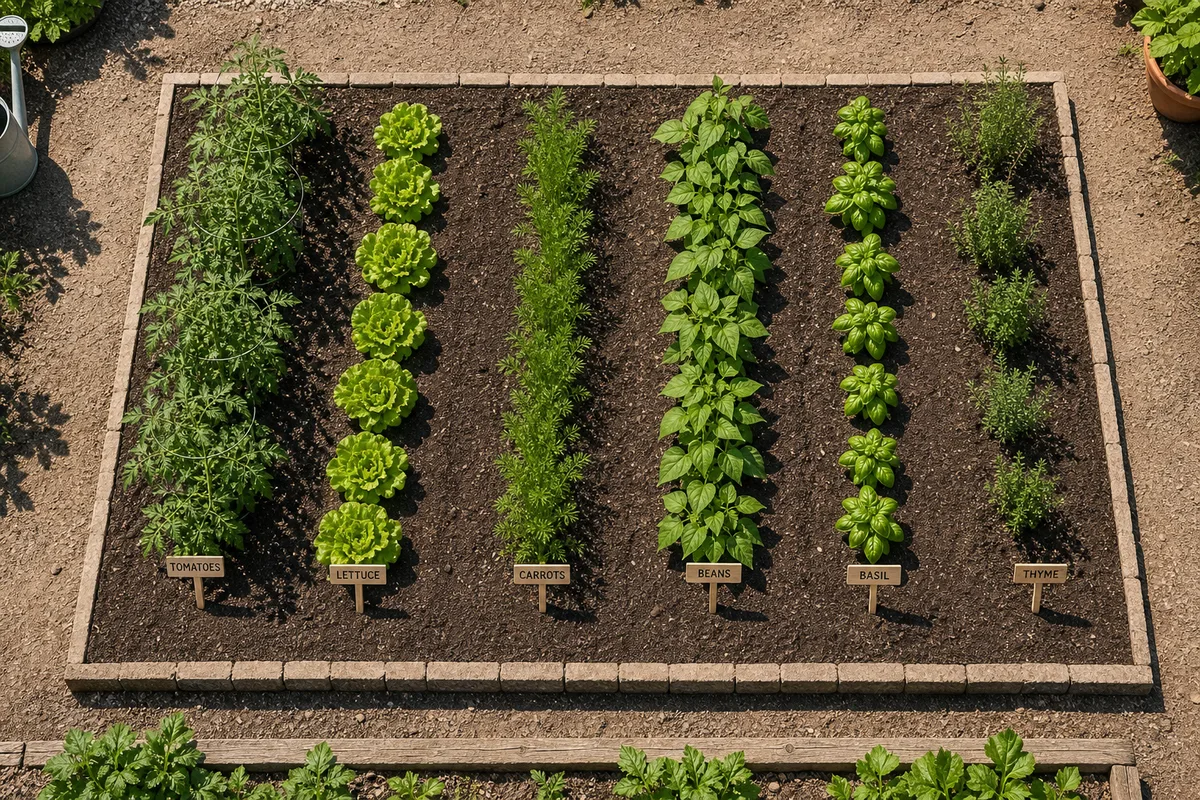
For one to three beds, or a garden you can water in under ten minutes, hand watering wins and it is not close. The daily chore is small, the control and the daily inspection are genuinely valuable, and installing drip on three beds is an elaborate solution to a problem you do not have. Keep the hose. Spend the afternoon on something else.
For four to eight beds, it depends, and it depends mostly on you rather than the garden. This is the crossover zone. If you are home most evenings and you actually enjoy the watering, hand watering is fine and you keep the daily contact with your plants. If the evening chore has started to feel like an obligation, or if you travel even a little in summer, this is the range where drip starts to earn its afternoon. Most people who install drip do it right around here, and they do it because the daily twenty minutes finally wore them down.
For more than eight beds, or any garden with a row of thirsty containers, or a gardener who is away for even a few days at a stretch in summer, drip wins clearly. Watering that much by hand reliably, every day, for a whole season, is a commitment almost nobody keeps, and the plants pay for the missed days. At this scale drip is not a luxury, it is what makes the garden survivable without turning your summer into a watering schedule.
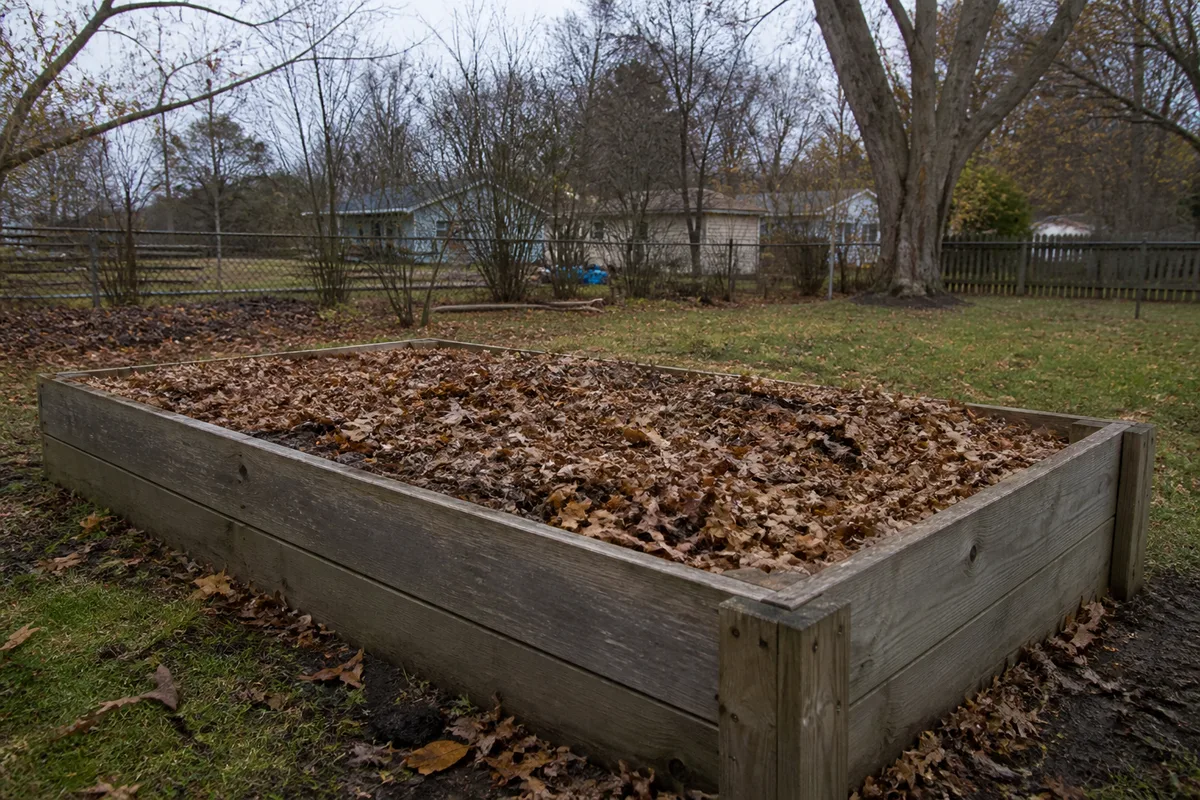
There is one more case worth naming: raised beds with deep, rich soil sit differently than in-ground rows or containers. A well-built raised bed holds moisture longer and forgives a skipped day more readily, which nudges the crossover a bit toward hand watering. If you are still planning your beds, how you build them affects this directly, and starting a home garden walks through the choices that set you up to water less often in the first place. Good soil is the cheapest irrigation there is.
A middle path: timers and soaker hoses
You do not have to pick a pure version of either method, and most experienced gardeners I know end up somewhere in the middle. The simplest upgrade to hand watering is not full drip at all. It is a hose-end timer screwed onto the spigot.
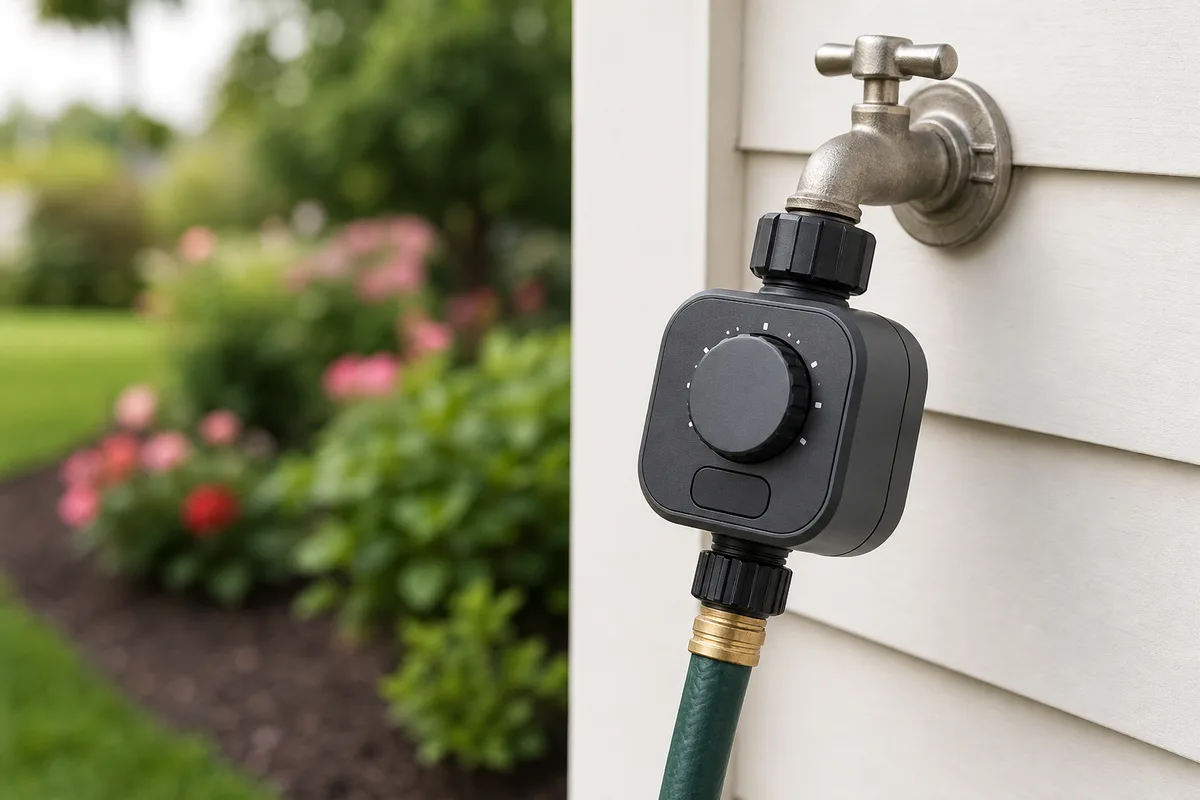 A hose timer attached to an outdoor spigot
A timer costs little, installs in the two minutes it takes to thread it onto the tap, and solves the single worst failure of hand watering, which is the missed day. Set it to run at dawn, connect it to whatever is already downstream, and the garden gets watered even when you are away for a weekend. It is the highest-value, lowest-effort change on this whole page. The catch is that a timer only automates the schedule, not the delivery: whatever the timer feeds, be it a sprinkler or a soaker, still waters the way that thing waters.
Which brings up soaker hoses, the honest middle ground between a wand and a full drip network. A soaker is a porous hose that weeps water along its whole length, so you snake it through a bed, cover it with an inch of mulch, and it delivers a slow soak to the root zone much like drip, at a fraction of the setup fuss. There is no punching emitters or planning runs. The trade-offs are real: a soaker waters its entire length evenly whether a plant is there or not, so it is less precise than emitters, it puts out less consistently along a long run as pressure drops toward the far end, and the pores eventually clog and the hose stiffens after a few seasons. But for a few beds of closely spaced plants, a soaker on a timer gives you most of what drip offers for a fraction of the work.
My actual recommendation for the person on the fence is to start here. Put a timer on the spigot this week regardless of anything else, because it fixes the missed-day problem for almost no money or effort. Add soaker hoses to your two thirstiest beds and see how it feels. If you find yourself wanting per-plant control, or your garden keeps growing, graduate to a real drip layout with the confidence that you now know exactly what problem you are solving. That path costs less, teaches you more, and keeps you from installing a network of tubing to solve a chore that a ten-dollar timer would have handled. Start small, automate the one thing that actually fails, and let the garden tell you when it needs more.