The most common mistake I see people make with a new dog is doing too much, too fast, out of pure good intentions. The dog arrives, and within the first day the whole family has met it, the neighbor's kids have come over, someone has taken it to the park, and by bedtime everyone is confused about why the dog is pacing, panting, or hiding behind the couch. Nothing went wrong exactly, and that is the tricky part. There was just far more happening than a dog fresh out of a shelter kennel or a breeder's litter can process.
The first two weeks are not about training a dog or bonding with it in any deliberate way. They are about giving the animal enough quiet and predictability that its nervous system settles down and it starts to believe this new place is safe. Almost everything good (recall, house habits, a dog that greets guests calmly) grows out of that early sense of safety, and almost every early problem traces back to skipping it. What follows is the plan I actually use, step by step and roughly day by day, biased toward doing less in week one than you will be tempted to.
Why the first two weeks set the tone
There is a rough guideline that circulates among shelter and rescue people called the "3-3-3" pattern, and while it is a generalization rather than a law, it is a useful frame. The idea is that a dog needs about three days to decompress and stop being in survival mode, about three weeks to start learning the household routine and showing you its real personality, and about three months to feel genuinely at home. The exact numbers vary with the individual dog (a confident eight-week-old puppy from a good breeder moves faster than a two-year-old rescue who has changed hands twice), but the sequence holds. Decompression comes before learning, and learning comes before real settling.
The practical consequence is that week one is not a training week. It is a recovery week. The single most common way people undermine those first two weeks is by pushing socialization early: introducing the dog to a stream of new people, other dogs, and busy places while it is still overwhelmed by the basics of a new house. That almost always backfires. A dog flooded with novelty before it feels safe does not become well-socialized; it becomes reactive, shut down, or clingy, and you spend the following months undoing the impression that the world is a lot to handle. So the mental model for the first fortnight is a small world that grows slowly, not a big world you drop the dog into.
Think of the dog's confidence as something you are building from a very small footprint outward. On day one the safe world might be one room and one person. Over two weeks, it expands to the whole house, the yard, a short walk, the resident cat behind a gate. Every time you add something new, you are spending a little of the trust you have built, so you add novelty in small amounts and watch how the dog handles each one before adding the next. Get the order and the pace right and the dog does most of the settling on its own.
The first hour: arrival done calmly
The arrival sets the emotional temperature for everything after, so the goal for the first hour is deliberately boring. Before the dog even comes through the door, have the space ready: water down, a bed or crate in a quiet spot, the area where you want it to relieve itself identified, and the house reasonably calm. If you have children, brief them beforehand that the dog is not a party guest and that the rule for the first hour is to sit still and let the dog come to them, not the other way around.
When you get the dog home, take it to the toileting spot first, on leash, and just wait a few minutes. A dog that has been in a car and is full of nervous energy will often need to go, and rewarding that first success outdoors quietly plants the earliest seed of house habits. Then bring it inside on the leash and let it explore one room at its own pace while you sit down, low and unbothered, and mostly ignore it. Ignoring a new dog is genuinely hard when every part of you wants to scoop it up, but a person who is calm and not looming is exactly what a wary animal reads as safe. Consider it the rare occasion where doing nothing is the advanced move.
Keep the first hour to one or two rooms, not a full-house tour, and keep the human energy low: no crowding, no passing the dog around, no high voices. Let it sniff, retreat, come back, and sniff again. If it finds a corner and lies down, that is a good outcome, not a sad one. Resist the urge to coax a nervous dog out into the open; let it choose when to emerge. Some dogs will be bouncing off the walls with excitement instead of hiding, and for those the same principle applies in reverse: keep things low-key so the excitement has room to come down rather than being fed. The message you want the dog to absorb in that first hour is simply that nothing alarming happens here.
The first night and where the dog sleeps
The first night is where a lot of new arrangements go sideways, and the reason is almost always the same: too much space. People imagine they are being kind by giving the dog a whole quiet room to itself, or the run of the house, and then they are baffled when the dog cries, paces, or has accidents all night. A large empty space is not comforting to an animal that has just lost everything familiar. It reads as exposure. A dog that is crated or gated in a smaller area, close to where its person sleeps, almost always settles faster than one loose in a big, silent room down the hall.
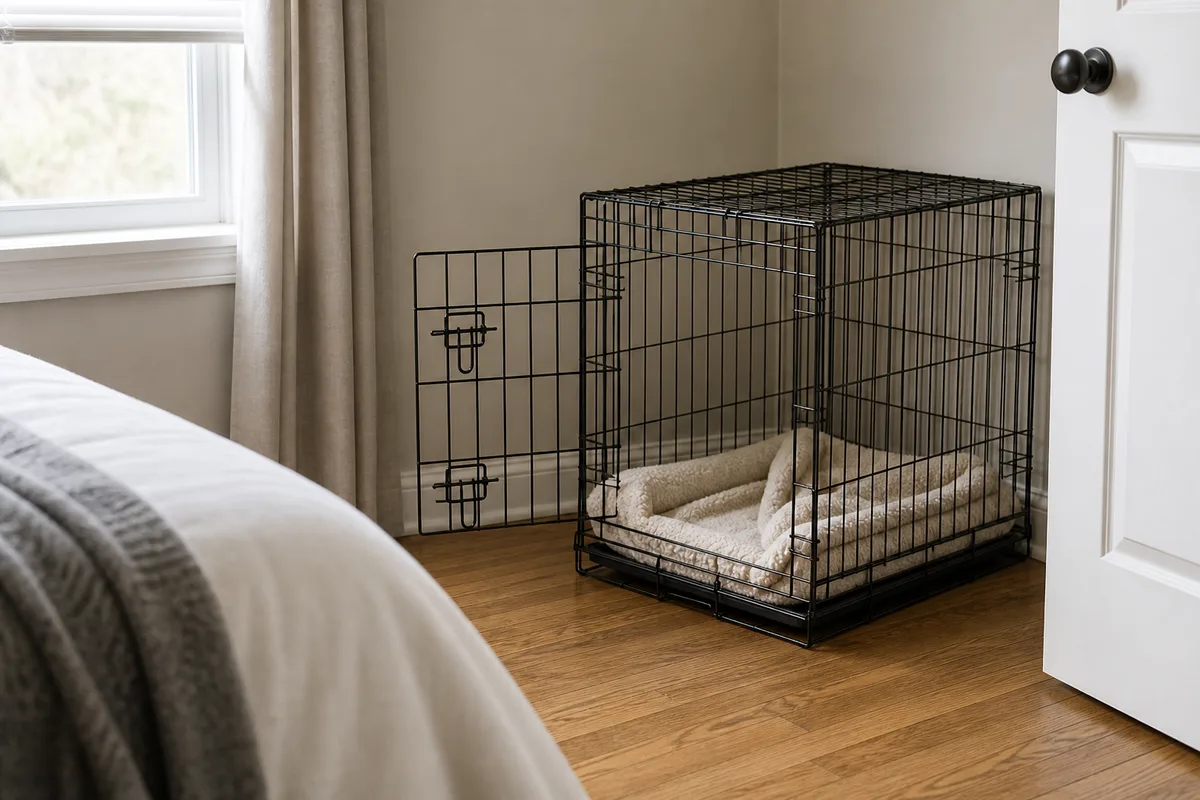 An open dog crate with bedding set up in a bedroom corner
My default for night one is a crate or a small penned-off area in the bedroom, within a few feet of the bed, with soft bedding and the door to the crate left open or the pen kept small. Being able to hear you breathe and smell you nearby does more for a nervous dog than any amount of square footage. If the dog has never been crated, do not force the door shut and walk away on the first night; that turns the crate into a trap in the dog's mind. Instead, keep the space small with a gate or pen so the dog cannot roam, and let the crate be an open, inviting cave within it. You can build real crate comfort over the following days rather than demanding it on hour one.
Expect some noise the first two or three nights and plan for it emotionally so you do not cave at 2 a.m. and create a pattern you did not intend. A little whining as the dog settles is normal and usually fades within twenty minutes if you stay quiet and present. What you want to avoid is a cycle where crying reliably produces attention, food, or freedom, because a smart dog learns that particular lesson faster than any command you will ever try to teach it on purpose. The exception worth respecting is the genuine need to relieve itself: puppies especially cannot hold it through the night at first, so a quiet, businesslike trip outside with no play and straight back to bed is the right call. Keep those trips dull on purpose so nighttime does not become social time.
Days 1-3: shrinking the world to build trust
These first three days are the decompression window, and the whole strategy is subtraction. You are shrinking the dog's world down to something it can master, then holding it there long enough for the dog to relax before you expand anything. In practice that means limiting the dog to one or two rooms rather than the whole house, keeping visitors at zero, skipping trips to busy places, and generally letting the days be quiet and repetitive. A baby gate or a folding pen is the most useful piece of equipment you own this week, quietly outperforming every plush bed and squeaky toy you were more excited to buy, because it lets you give the dog a defined, safe territory without shutting it away behind a closed door. The bed itself can wait a week or two anyway; you will know more about how the dog actually sleeps, sprawled or curled, once it has settled, and picking a bed that lasts is easier when you have watched it for a few nights.
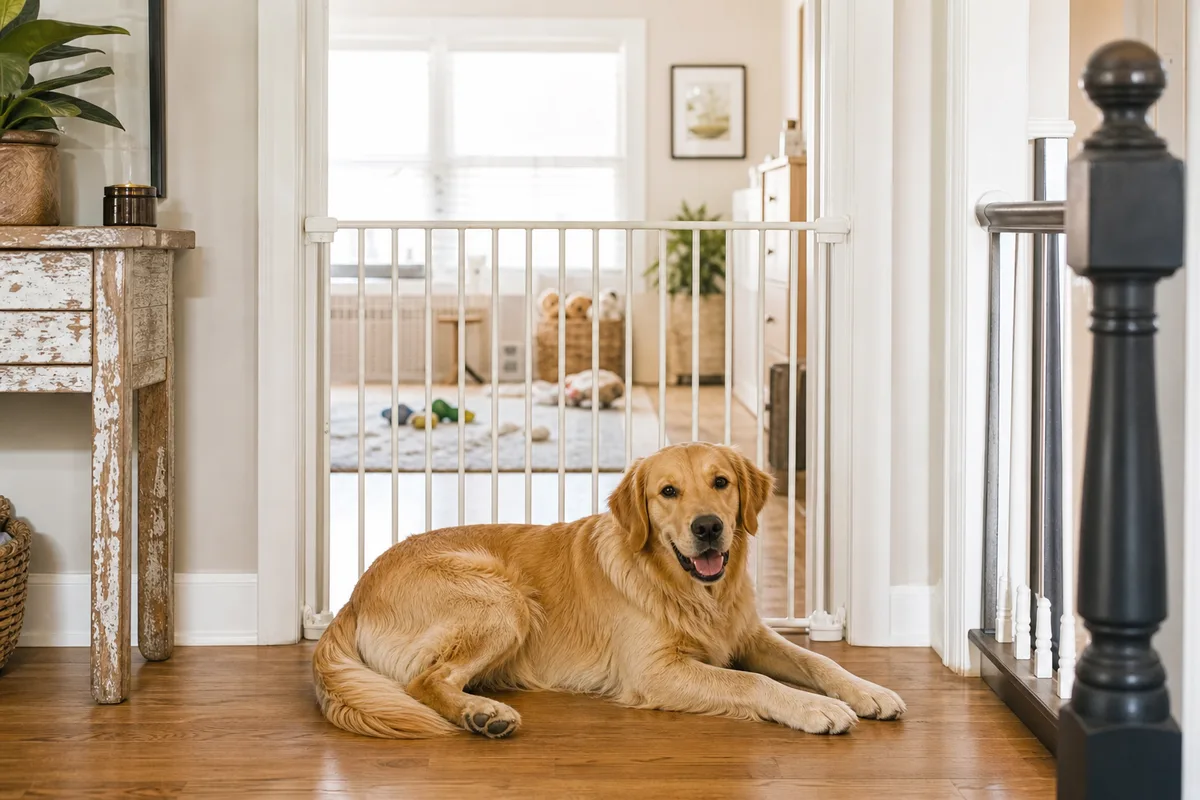 A dog resting beside a baby gate used to limit its space at home
A confined space is not a punishment here; it is a favor. A dog with access to the whole house on day two has to stay alert to every corner of a large unknown territory, which is exhausting for an animal already low on reserves. Give it a living room and a kitchen with a gate across the hall, and it has a patch it can actually come to know. I keep the routine within that patch almost monotonous on purpose: meals at the same two or three times, short leashed trips to the same toileting spot, long stretches of calm where the dog can nap undisturbed. Sleep matters more than people expect in these first days; a decompressing dog may sleep a great deal, and that rest is part of the recovery, not a sign of a dull animal.
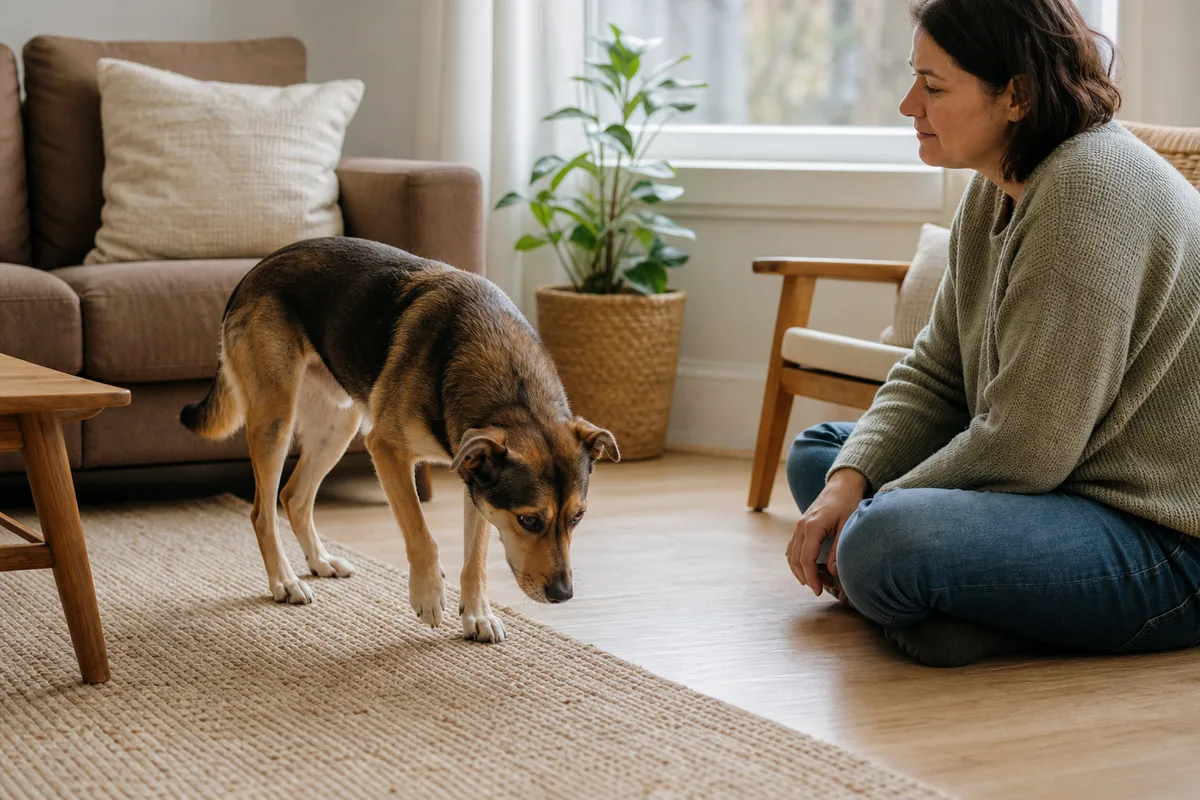
Keep interaction on the dog's terms during this stretch. Sit on the floor and let the dog approach and leave as it pleases rather than reaching for it, picking it up, or following it around. Hand-feeding a few pieces of its meal can help a wary dog associate you with good things without any pressure, but avoid staring, hovering, or the constant petting that people default to when they are excited. If the dog shows early signs of guarding a spot, a toy, or a food bowl (stiffening, a low freeze), the right response now is simply to give it space and not crowd those resources, not to challenge it. You are three days into a relationship. The goal is only that the dog learns this place and these people are predictable and safe, which is the foundation everything else in the everyday pet care routine is built on top of.
Days 4-14: adding routine and light training
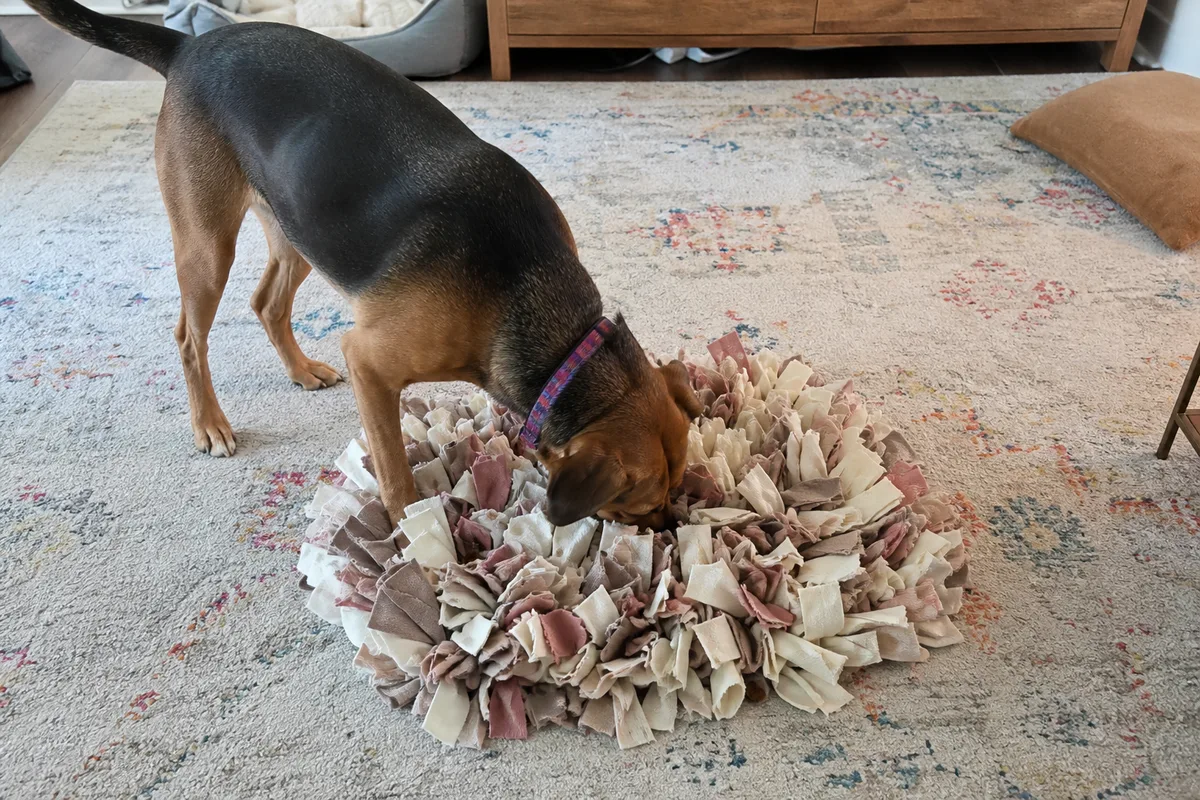
Once the dog has had a few days to decompress and you can see it starting to relax (sleeping soundly, taking food readily, moving through its small territory without startling at everything), you can begin the second phase, which is building routine and introducing the lightest possible training. This maps onto the "three weeks to learn the routine" part of the 3-3-3 idea, and the emphasis is on rhythm rather than obedience. Dogs settle fastest when the day has a predictable shape, so the most valuable thing you can install in this stretch is a consistent schedule: meals at the same times, walks or yard trips at roughly the same points in the day, a wind-down before bed. If you are in an apartment with no yard, the enrichment that fills that shape, scent games and food puzzles and a calm finish, matters even more, and wearing out a dog without a yard covers how to build it in. The predictability itself is calming, and it also makes house training far easier because a dog that eats and goes out on a schedule quickly develops a schedule for relieving itself, which is the whole basis of the puppy house-training routine.
Now is also when you can start the gentlest training, and the first thing I teach is not a command at all but name recognition. This is where a specific, concrete method matters. Name recognition builds fastest not through one long training session but through many tiny ones scattered across the day: roughly 20 to 30 low-stakes repetitions daily, each just a few seconds long. The pattern is simple: say the dog's name once, and the instant it looks toward you, mark that moment with a short word like "yes" and give a small treat. That is the whole rep. Done twenty-odd times a day in the ordinary flow of life (while you are making coffee, passing through a room, sitting on the floor), it teaches the dog that its name means good things are about to happen and that turning toward you pays off. It is less a training session than a habit you barely notice you are keeping.
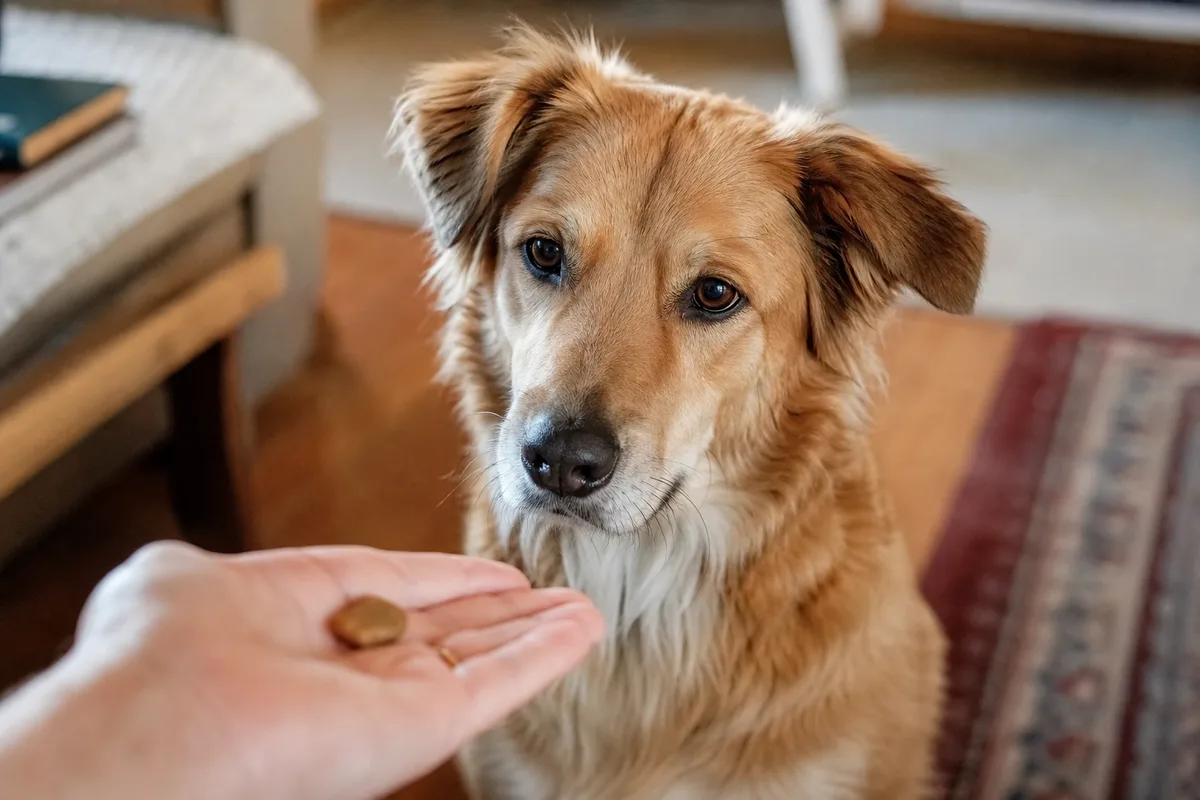 A person offering a training treat to a new dog
The reason short, frequent reps beat one long drill is partly attention span and partly timing. A dog, especially a young one, checks out of a ten-minute session quickly, and the learning that sticks is the association between an action and an immediate reward. The tighter the gap between the dog looking at you and the treat arriving, the faster it learns, ideally within a second. That timing is the core of nearly all reward-based training, and it is worth understanding properly, because getting it slightly wrong is the difference between a dog that learns in days and one that stays confused; the mechanics are laid out in the piece on how dogs learn through reward timing. Keep these first sessions to easy wins only (name recognition, coming a few steps when called, sitting for a treat) and stop while the dog is still interested rather than drilling until it loses focus. Two weeks in, you are aiming for a dog that knows its name, is starting to grasp the daily rhythm, and finds you rewarding to pay attention to. That is plenty.
Introductions: people, resident pets, the yard
Introductions are the part people most want to rush and most need to slow down, because a bad early introduction is far harder to undo than a slow one is to speed up. The governing rule for the first two weeks is that novelty gets added in small, controlled doses only after the dog is settled, not as a way to jump-start settling. Meeting a lot of new people and animals in week one does not socialize a dog; it overwhelms one. So I hold most introductions until the back half of the first two weeks, and even then I keep each one brief and low-pressure.
For new people, the reliable approach is to have visitors ignore the dog at first: no direct eye contact, no reaching over the head, no baby talk aimed at it. Let the person sit and be boring while the dog investigates them at its own pace, and let the dog choose whether to make contact. A treat tossed gently to the floor rather than offered by hand lets a cautious dog approach without feeling cornered. Keep first meetings to one or two calm adults rather than a crowd, and postpone the excited children-and-relatives gathering until the dog is well past its decompression phase. A dog that meets people this way learns that guests are calm and optional; a dog swarmed on day two learns that people arriving means being overwhelmed.
Resident pets need the slowest hand of all, and here the equipment does the work. A baby gate or a cracked door lets a new dog and a resident cat or dog live alongside each other, smelling and seeing one another, for days before they ever share space directly. Feed them on opposite sides of a barrier so each associates the other's presence with something good. When you do allow direct contact, keep it short, keep the new dog on a leash so you can calmly steer rather than yank, and end the session while it is still going well rather than waiting for it to sour. For the yard, treat it as another new space to introduce gradually: short leashed trips at first so the dog learns the boundaries and the toileting spot, and no unsupervised free run until you know the fencing is secure and the dog is not going to panic-bolt. Every one of these introductions is a small withdrawal from the trust account you spent the first days filling, which is exactly why you make them small.
Signs it's going well, and signs to slow down
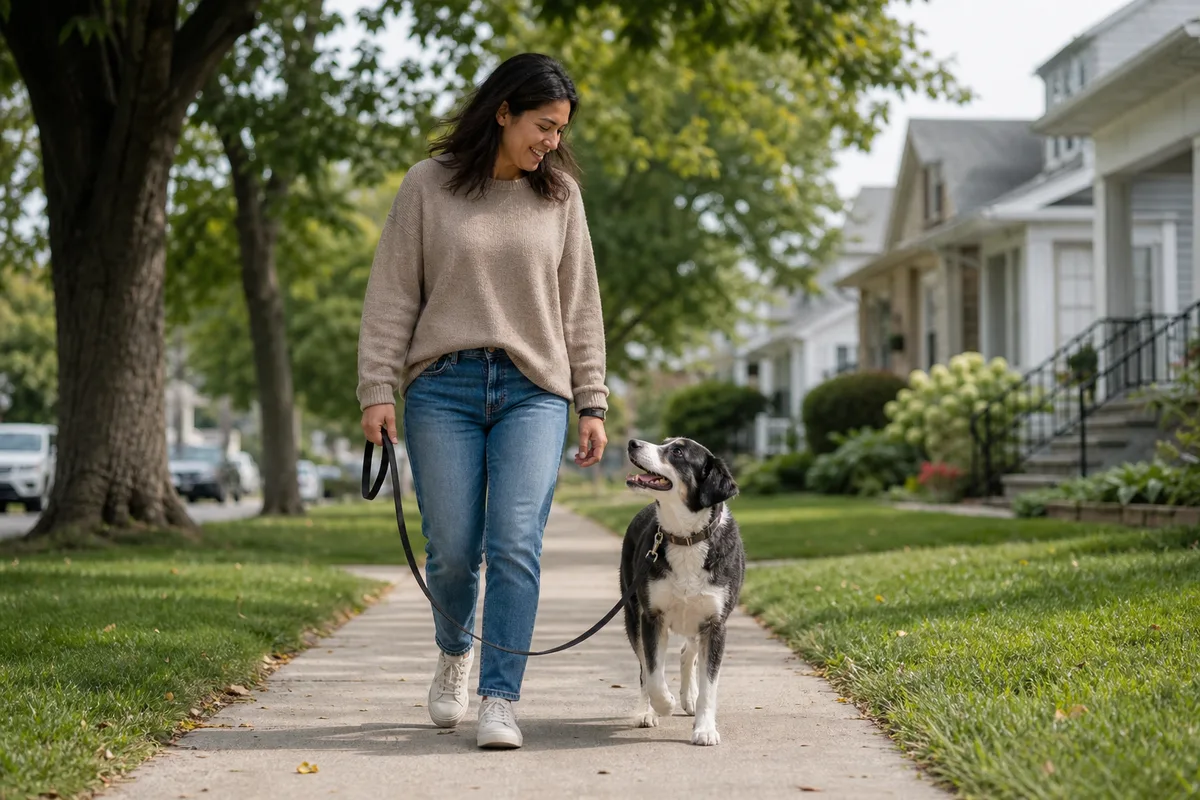
Two weeks in, you want to be able to read whether the plan is working, and dogs give clear signals if you know what to watch for. The encouraging signs are mostly about relaxation and appetite. A dog that is settling will start eating readily rather than picking at food, will sleep deeply and in the open rather than only hiding, will shake off tension after a startle instead of staying wound up, and will begin to seek you out for contact on its own terms. Loose body language (a soft mouth, a relaxed tail carriage for that individual dog, a willingness to lie belly-exposed or sprawled out) tells you the nervous system has come down. Starting to respond to its name and showing curiosity about the house rather than caution are both good markers that decompression has done its job and learning has begun.
The signs to slow down are the mirror image, and the correct response to all of them is the same: shrink the world back down and add less. A dog that stops eating, hides constantly, flinches at ordinary sounds two weeks in, guards food or spaces with real intensity, or seems to be getting more reactive rather than less is telling you it has had more novelty than it can absorb. The fix is almost never more exposure or more training; it is retreat to the smaller, calmer world of the first days and a slower pace from there. Pulling back is not a failure or a step backward. It is exactly the tool the situation calls for, and a dog given that space usually resumes progress once the pressure comes off.
It is also worth holding realistic expectations about the timeline, because the biggest source of unnecessary worry is comparing a two-week-old arrangement to a finished, settled dog. Remember that real settling takes closer to three months than two weeks, and that the quiet, slightly reserved dog at day fourteen is often not the dog you will have at day ninety, who may turn out to have opinions about the mail carrier you never saw coming. A rescue that has changed homes may take considerably longer to show its full personality, and pushing to speed that up tends to slow it down. If you have kept the world small, kept the routine predictable, held introductions to a trickle, and let the dog set the pace, you have done the part that actually matters. The rest is time, and the habits you build from here (the daily rhythm, the reward timing, the steady expansion of the dog's world) are what the ordinary everyday care routine carries forward. The first two weeks are not where a dog becomes trained or fully bonded. They are where it decides the place is safe, and everything else is built on that.